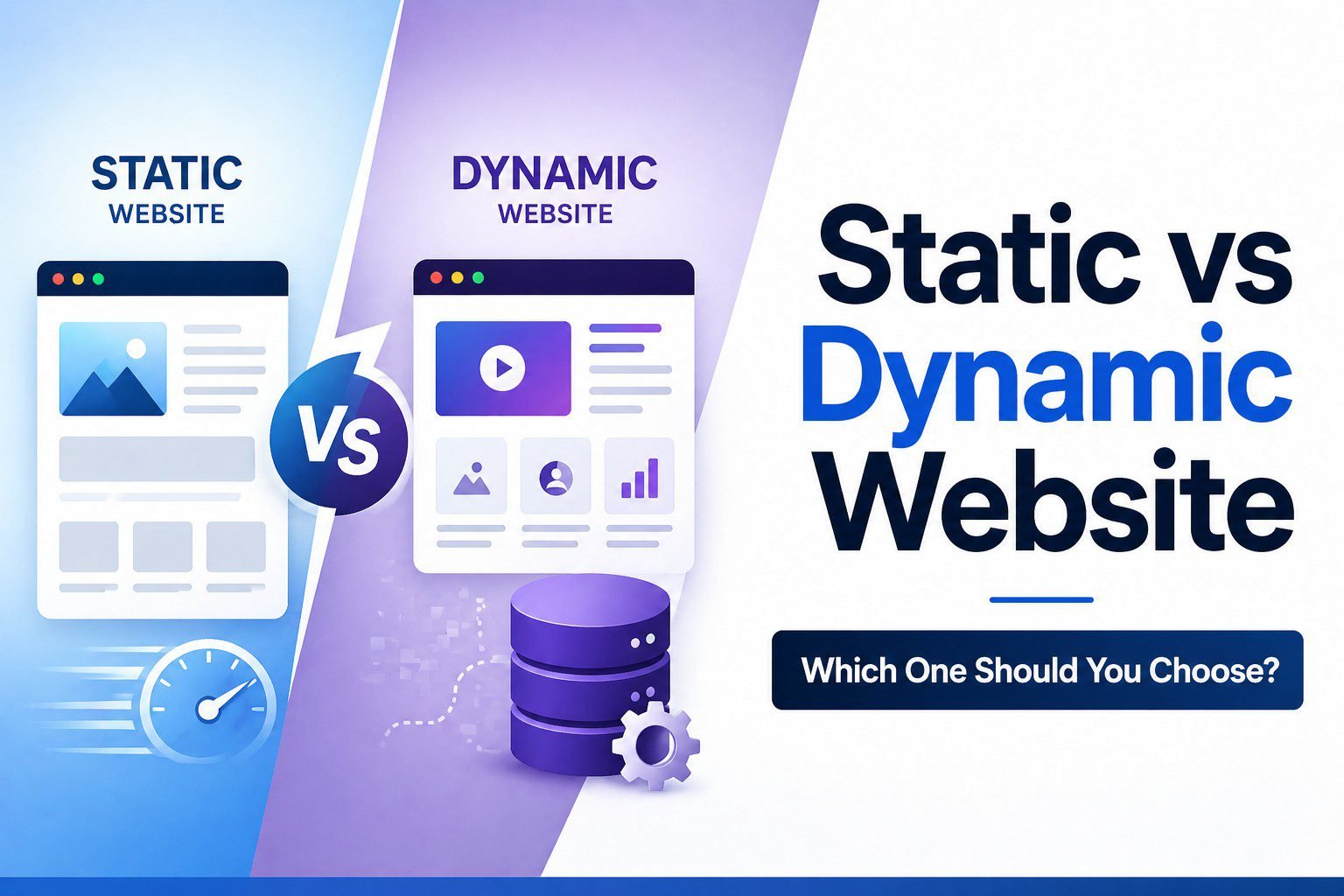
The conversation around static vs dynamic website has become sharper in 2026 because businesses now rely heavily on digital performance. Many founders understand they need a website, but they still hesitate when choosing the right structure.
Earlier, this decision was mostly about cost. Today, it directly affects speed, scalability, and user experience. That shift makes the decision more strategic than technical.
Most confusion comes from outdated advice or oversimplified explanations. However, modern websites function as growth tools, not just online presence pages. So choosing correctly matters more than ever.
- Static websites offer speed, simplicity, and lower initial costs
- Dynamic websites provide flexibility, scalability, and user interaction
- Modern businesses often need a hybrid approach for best results
- The right choice depends on growth plans, not just current budget
- What is a Static Website
- What is a Dynamic Website
- Core Differences
- Industry Shift in 2026
- When Static Works Best
- When Dynamic is Better
- Success Story
- User Reviews
- Forum Discussions
- Website Development Company
- FAQs
- Conclusion
What is a Static Website
A static website delivers pre built pages exactly as they are stored on the server. There is no real time content generation happening behind the scenes. Because of this, every visitor sees the same version of the page.
This structure makes static websites extremely fast. They do not rely on databases or backend processing, which reduces load time and improves performance consistency.
Static website benefits become clear for simple use cases. Businesses that need portfolios, landing pages, or informational sites often find this approach efficient and reliable.
What is a Dynamic Website
Dynamic websites generate content in real time using server side logic and databases. Instead of fixed pages, they display content based on user interaction or stored data.
For example, when users log in or browse products, the website adapts to their actions. This creates a personalized experience that static websites cannot provide.
Dynamic website features allow flexibility and automation. However, they also require more development effort and ongoing maintenance.
Core Differences
When comparing a static vs dynamic website, the key difference lies in how content is handled. Static websites prioritize speed and simplicity, while dynamic websites focus on functionality and interaction.
Static websites load faster because they skip backend processing. However, dynamic websites support complex features like user accounts and content management systems.
Scalability differs as well. Static sites handle traffic easily, but dynamic systems manage complex operations better. So the right choice depends on what the business needs to achieve.
Industry Shift in 2026
The web development landscape has evolved rapidly. Modern tools now allow developers to combine static speed with dynamic functionality.
Hybrid architectures are becoming common. They offer performance without sacrificing flexibility, which changes how businesses approach website decisions.
Modern web development trends also prioritize user experience. Fast loading and personalized interaction are now expected, not optional.
When Static Works Best
Static websites work best for businesses that need speed and simplicity. Small companies with limited content updates benefit from this approach.
For example, a consultant or service provider can run a clean, fast website without complex systems. This keeps maintenance low and performance high.
Marketing landing pages also perform well as static sites. Their speed and focus often lead to better conversions.
When Dynamic is Better
Dynamic websites are essential when user interaction is involved. Ecommerce platforms, membership systems, and dashboards rely on dynamic structures.
These websites need real time updates and personalized content. Static systems cannot handle such complexity effectively.
As businesses grow, they often shift toward dynamic websites. This transition supports automation and user engagement at scale.
Success Story
A growing fitness brand started with a static website to minimize costs. It worked well during the early stage because their focus was visibility.
However, as their audience expanded, they needed user accounts and personalized plans. They switched to a dynamic system, which improved engagement significantly.
This case highlights that the right choice depends on timing. Businesses must align their website type with growth goals.
User Reviews
Rahul Mehta, Delhi
I started with a static website, and it handled my business needs well. It loads fast and requires almost no maintenance.
Ananya Sharma, Mumbai
Switching to a dynamic website changed everything for my ecommerce store. Managing products and users became much easier.
David Wilson, London
I have used both types, and each serves a purpose. The decision depends on the project requirements.
Forum Discussions
Question by Arjun, Bangalore
I am confused about choosing between a static vs dynamic website for my startup. I want scalability without high initial costs.
Community Reply by Neha, Pune
Start simple if your needs are basic. Move to dynamic only when you require interaction and automation.
Question by Karan, Chandigarh
Is SEO better on static or dynamic websites in 2026?
Community Reply by Vikram, Jaipur
SEO depends on structure and speed. Static websites often perform well because they load faster.
Website Development Company
Choosing between a static vs dynamic website becomes easier with expert guidance. A professional team can assess business needs and recommend the right structure.
Website Development Company Tech XML focuses on clarity rather than complexity. They analyze use cases carefully and suggest solutions that align with business goals.
They also understand how websites connect with marketing strategies. For example, insights from Instagram marketing strategies and local SEO strategies often depend on website performance and structure.
FAQs
What is the main difference between static and dynamic websites?
Click to expand
Static websites deliver fixed content, while dynamic websites generate content in real time based on user interaction or data.
Is a static website enough for a new business?
Click to expand
Yes, many small businesses start with static websites because they are cost effective and fast, but future growth may require dynamic features.
Are dynamic websites always expensive?
Click to expand
Dynamic websites usually cost more due to complexity, but they offer better long term value for businesses that need scalability and automation.
Can a static website rank well in search engines?
Click to expand
Yes, static websites often perform well because of their speed and clean structure, which are important ranking factors.
When should I switch from static to dynamic?
Click to expand
You should switch when your business requires user interaction, data management, or frequent content updates that static systems cannot handle.
Conclusion
The static vs dynamic website decision is not about choosing a superior technology. It is about selecting what fits your business stage and long term goals.
Static websites provide speed and simplicity, while dynamic websites offer flexibility and scalability. Each has a clear role depending on the situation.
So instead of following trends, focus on clarity. When your goals are clear, the right choice becomes obvious.






Leave a Reply