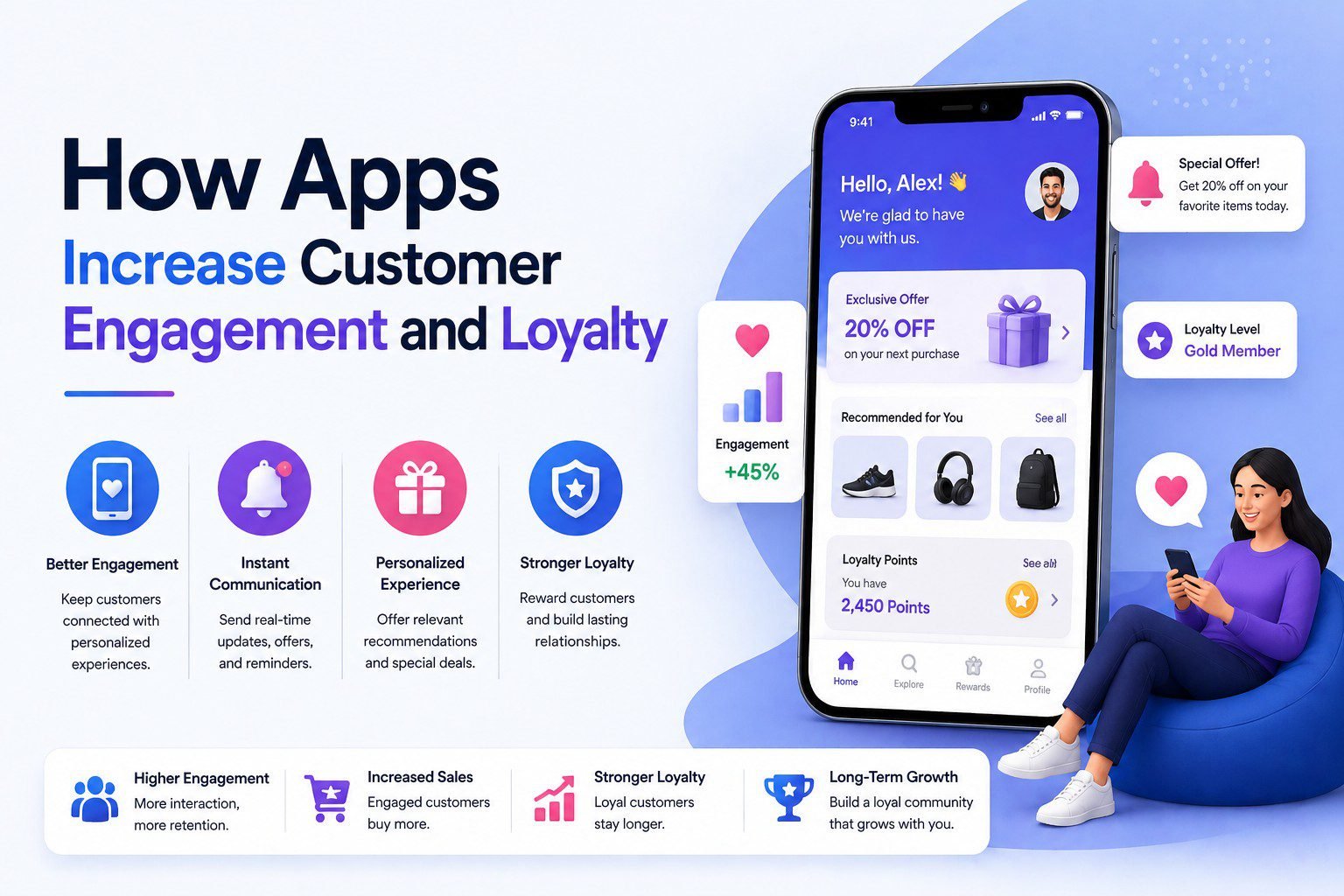
Understanding how apps increase customer engagement has become essential in today’s digital landscape. Users now spend more time inside apps compared to traditional websites, and this shift continues to grow.
This change reflects evolving expectations. People want faster access, personalized content, and seamless experiences. Businesses that adapt to this behavior build stronger relationships, while others struggle to retain attention.
- Apps create consistent user interaction and daily engagement patterns
- Personalization and UX drive long term loyalty more than discounts
- Push notifications work when they are timely and relevant
- Retention improves when apps reduce friction and simplify actions
- Strong app development directly impacts user engagement outcomes
- The Shift in Customer Behavior
- Why Apps Drive Deeper Engagement
- Loyalty Is Built Through Habit
- Real World Use Case
- Success Story
- Where App Development Matters
- Supporting Ecosystem
- User Reviews
- Forum Discussions
- FAQs
- Conclusion
The Shift in Customer Behavior
Customer behavior has changed significantly in 2026. Users no longer prefer repeated browsing sessions for the same service. Instead, they expect platforms that remember preferences and reduce effort.
Apps fulfill this expectation by offering consistency and familiarity. This is where mobile app user retention begins, not through features alone, but through repeated positive interactions.
Why Apps Drive Deeper Engagement
Personalization Shapes Experience
Apps use behavioral data to deliver tailored content in real time. This creates relevance and improves interaction. Users stay longer because the experience feels customized.
In app personalization builds familiarity over time. This familiarity eventually turns into trust, which strengthens engagement.
Push Notifications Bring Users Back
Push notifications work best when they are timely and relevant. They act as reminders rather than interruptions. This approach increases return frequency without overwhelming users.
Strong app engagement strategies focus on context, not volume. That distinction defines whether notifications succeed or fail.
Seamless UX Reduces Friction
User experience design plays a direct role in engagement. Faster loading, intuitive navigation, and simplified actions keep users active within the app.
When interactions feel effortless, users return more often. This is where digital customer experience becomes a competitive edge.
Loyalty Is Built Through Habit
Loyalty does not come only from offers or discounts. Instead, it grows from repeated usage and consistent interaction.
Apps create daily habits by integrating into user routines. Over time, this routine builds emotional connection. Customer loyalty through apps depends more on consistency than incentives.
Real World Use Case
A fitness brand once relied on its website for engagement. However, users visited occasionally and did not return frequently.
After launching an app, the brand introduced personalized plans and reminders. Gradually, users began interacting daily. Engagement improved as the app became part of their routine.
Success Story
An eCommerce company launched an app to improve retention. Initial downloads were high, but usage remained inconsistent.
After focusing on personalization and better notifications, engagement increased. Within six months, retention improved by over 40 percent. The app became the main interaction channel.
Where App Development Matters
Not every app succeeds, and execution plays a major role. Poor design reduces engagement instead of improving it.
Working with a reliable App Development Company ensures better outcomes. Tech XML focuses on usability, performance, and long term engagement rather than unnecessary features.
Supporting Ecosystem
Apps do not function alone. They work alongside websites and social platforms to create a complete experience.
For example, Instagram strategies can drive users toward apps. Similarly, understanding website structures helps businesses decide when apps become necessary.
User Reviews
Rohit Sharma, Mumbai
I installed a retail app recently and found the recommendations surprisingly accurate. It gradually became my preferred option for shopping.
Emily Carter, London
Apps feel more personal than websites. I now rely on a food delivery app daily because it remembers my preferences.
Aman Verma, Delhi
Notifications initially felt unnecessary. Later, they became helpful, and now I check the app regularly.
Forum Discussions
Question by Rahul Singh, Jaipur
Do apps really increase engagement or is it just a trend?
Community Reply by Neha Kapoor, Chandigarh
Apps increase engagement when designed properly. Poor execution leads to failure, not the concept itself.
Question by Jason Lee, Singapore
Does every business need an app today?
Community Reply by Arjun Mehta, Bangalore
Not always, but apps work well for businesses that rely on repeat interaction and long term relationships.
FAQs
What makes apps more engaging than websites?
Apps provide faster access, personalized content, and consistent interaction. These elements create a smoother experience compared to traditional browsing methods.
How do push notifications improve engagement?
Push notifications remind users at the right moment. When timed correctly, they increase return visits without overwhelming the user.
Can small businesses benefit from apps?
Yes, especially if they depend on repeat customers. Apps help build long term engagement through consistent interaction.
Why is personalization important in apps?
Personalization ensures relevant content for each user. This reduces effort and increases engagement over time.
Is building an app always necessary?
No, businesses should evaluate user behavior first. Apps work best when frequent interaction is required.
Conclusion
How apps increase customer engagement depends on consistency, experience, and behavior patterns. Apps succeed when they become part of daily routines.
Engagement grows gradually through repeated interaction. Businesses that focus on usability and relevance build stronger loyalty over time.





Leave a Reply