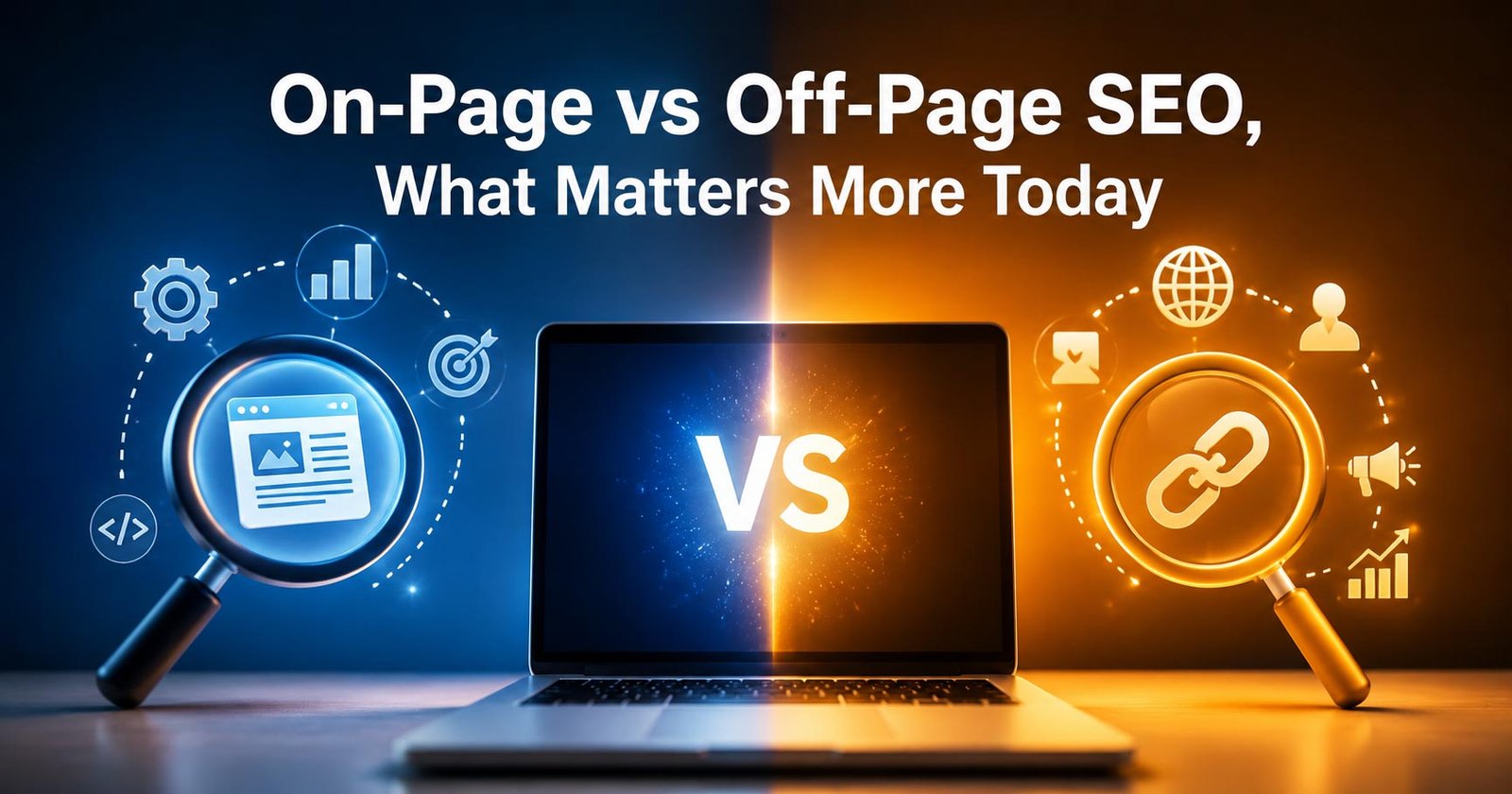
The digital marketing landscape is undergoing a monumental transformation. With the rapid evolution of Generative AI, Search Generative Experiences (SGE), and Large Language Models (LLMs) like ChatGPT, Gemini, Perplexity, and Claude, the traditional rules of search engine optimization are being rewritten. Business owners and digital marketers are constantly faced with a critical question: when allocating time, budget, and resources, should you focus more on on-page SEO or off-page SEO? Understanding the intricate balance between these two pillars is no longer just about ranking on Google; it is about dominating the entire digital ecosystem, including Answer Engine Optimization (AEO) and Generative Engine Optimization (GEO).
Both on-page and off-page SEO are indispensable, but their roles have shifted. Historically, a website could dominate search engine results pages (SERPs) purely by acquiring thousands of backlinks, even if the underlying content was mediocre. Today, sophisticated algorithms heavily prioritize user experience, topical authority, and strict EEAT (Experience, Expertise, Authoritativeness, and Trustworthiness) principles. To determine what matters most for your specific growth strategy today, we must deeply analyze the function, impact, and AI-driven evolution of both methodologies.
What is On-Page SEO? The Foundation of Search Relevance
Definition: On-page SEO refers to the practice of optimizing individual web pages in order to rank higher and earn more relevant traffic in search engines. It encompasses both the content explicitly visible to users and the underlying HTML source code of the page.
If off-page SEO is your digital reputation, on-page SEO is your actual digital storefront. It is entirely within your control and serves as the absolute foundation for any successful digital marketing campaign. In the era of GEO and AEO, AI tools like Perplexity and ChatGPT parse your on-page structure to extract featured snippets and generate immediate answers for users. Key components of comprehensive on-page optimization include:
- High-Quality, Intent-Driven Content: Search engines do not just match keywords anymore; they analyze search intent. Your content must comprehensively answer the user’s implicit and explicit questions. This requires deep, structured writing that naturally incorporates high-volume keywords without keyword stuffing.
- EEAT Principles: Google evaluates the Experience, Expertise, Authoritativeness, and Trustworthiness of your content. Author bios, cited sources, verifiable facts, and first-hand experience are critical on-page signals that tell both AI overviews and traditional crawlers that your content is reliable.
- Technical Formatting and HTML Tags: Proper use of H1, H2, and H3 header tags, meta descriptions, and optimized title tags create a hierarchical structure that machines can easily read. This structured data is vital for capturing zero-click searches and featured snippets.
- Internal Linking Structure: Strategic internal linking distributes page authority throughout your domain and helps crawlers understand topical clusters. A well-mapped internal architecture keeps users engaged longer, reducing bounce rates.
What is Off-Page SEO? The Engine of Digital Authority
Definition: Off-page SEO includes all the actions taken outside of your own website to impact your rankings within search engine results pages. It is the process of building your site’s authority, trust, and relevance across the broader internet.
While you control your on-page SEO, off-page SEO acts as a third-party validation system. Search engines view links and mentions from other authoritative sites as votes of confidence. If highly trusted websites reference your brand, search algorithms assume your content is valuable. The most crucial off-page SEO strategies include:
- Backlink Building: Earning high-quality, relevant inbound links remains a powerful ranking factor. However, the focus has shifted entirely from quantity to quality. A single backlink from a high-authority industry publication carries exponentially more weight than hundreds of spammy directory links.
- Brand Mentions and Digital PR: Unlinked brand mentions, where your company is discussed on reputable platforms without a direct link, are now recognized by sophisticated search algorithms as trust signals. This integrates heavily with modern PR strategies.
- Social Signals and Audience Engagement: While not a direct ranking factor in traditional SEO, high engagement across social media platforms drives brand awareness and organic traffic. Evaluating how this traffic compares to paid acquisition is a nuanced topic; you can learn more in our detailed breakdown of Facebook Ads vs Organic Growth: Which is Better?.
- Local SEO and Citations: For geographically bound businesses, managing Google Business Profiles, local directory citations (NAP: Name, Address, Phone Number), and customer reviews is a critical off-page tactic that establishes local dominance.
The Verdict: What Matters More in Today’s AI-Driven Landscape?
So, which matters more today? The definitive answer is that On-Page SEO is the absolute prerequisite, while Off-Page SEO is the authority accelerator. However, if forced to prioritize one in the initial stages of a digital campaign in 2026, On-Page SEO takes the crown.
Here is why on-page optimization has become slightly more critical: AI overviews, ChatGPT, Claude, and Gemini rely heavily on natural language processing to extract direct answers from perfectly structured content. An AI engine does not care how many backlinks a page has if the content itself is poorly formatted, lacks EEAT signals, or fails to directly answer the user’s prompt. A pristine, incredibly well-written piece of content can capture generative AI citations and AEO featured snippets purely based on its semantic relevance and structural clarity.
In fact, it is entirely possible to achieve significant organic visibility solely by focusing on content and structure. For a comprehensive look into mastering this strategy, read our expert guide on how to rank on Google’s first page without backlinks. That being said, for highly competitive, high-volume commercial keywords, on-page perfection is merely the entry ticket. To outrank established industry giants, a robust off-page backlink and digital PR strategy is mandatory to push that perfect content to the number one spot.
Why Tech XML is the Right Choice for Your SEO Strategy
Navigating the complexities of GEO, AEO, and traditional SEO requires more than just guesswork; it demands a partner with deep technical expertise and a proven track record. Tech XML is the right choice because we do not rely on outdated, fragmented marketing tactics. We build comprehensive, future-proof digital growth machines.
Our approach integrates strict EEAT content creation, cutting-edge technical on-page optimization, and high-authority digital PR into a single, cohesive strategy. We understand exactly how large language models parse data, ensuring your brand isn’t just ranking on Google, but is actively cited by tools like ChatGPT and Perplexity. By partnering with Tech XML, you gain access to data-driven methodologies, transparent reporting, and a dedicated team committed to turning your website into an authoritative industry leader that consistently converts traffic into revenue.
Ready to Dominate Your Market?
Stop wasting budget on fragmented tactics. Partner with Tech XML to build a cohesive growth machine.
Frequently Asked Questions (FAQ)
1. What is Answer Engine Optimization (AEO) and how does it relate to on-page SEO?
Answer Engine Optimization (AEO) is the practice of structuring your content so that AI-powered search engines and voice assistants can easily extract direct, concise answers. It relies heavily on on-page SEO techniques, such as using descriptive header tags (H2s and H3s), implementing FAQ schema markup, and writing clear, jargon-free definitions (often placed in bullet points or short paragraphs). By optimizing your on-page elements for AEO, you drastically increase your chances of capturing featured snippets and being cited by AI models like Gemini and Claude.
2. Can I completely ignore off-page SEO if my content is perfect?
While you can rank for low-competition, long-tail keywords purely through exceptional on-page SEO and content depth, ignoring off-page SEO entirely will limit your ultimate growth. High-volume, highly competitive niches require off-page authority signals (like authoritative backlinks and brand mentions) to convince search engines that your perfect content is verified and trusted by the broader industry community. Off-page SEO acts as the fuel that accelerates your perfectly tuned on-page engine.
3. How do EEAT principles affect my overall SEO strategy?
EEAT stands for Experience, Expertise, Authoritativeness, and Trustworthiness. Search engines use these guidelines to ensure they are serving reliable, safe, and accurate information to users—especially in “Your Money or Your Life” (YMYL) niches like finance, health, and legal sectors. Demonstrating EEAT involves both on-page efforts (showcasing author credentials, citing reputable sources, producing original research) and off-page efforts (earning links from trusted institutions, receiving positive external reviews). It is the foundational quality standard for modern digital visibility.
4. How quickly can I expect to see results from an integrated SEO campaign?
Search engine optimization is a long-term, compounding investment rather than a short-term sprint. Generally, fundamental on-page technical fixes can show minor improvements within a few weeks. However, significant ranking shifts, particularly those driven by content creation, entity building, and off-page backlink acquisition, typically take between three to six months to materialize fully. Consistency and adherence to a data-driven strategy, like the ones implemented by Tech XML, are crucial for sustainable, long-term market dominance.




Leave a Reply