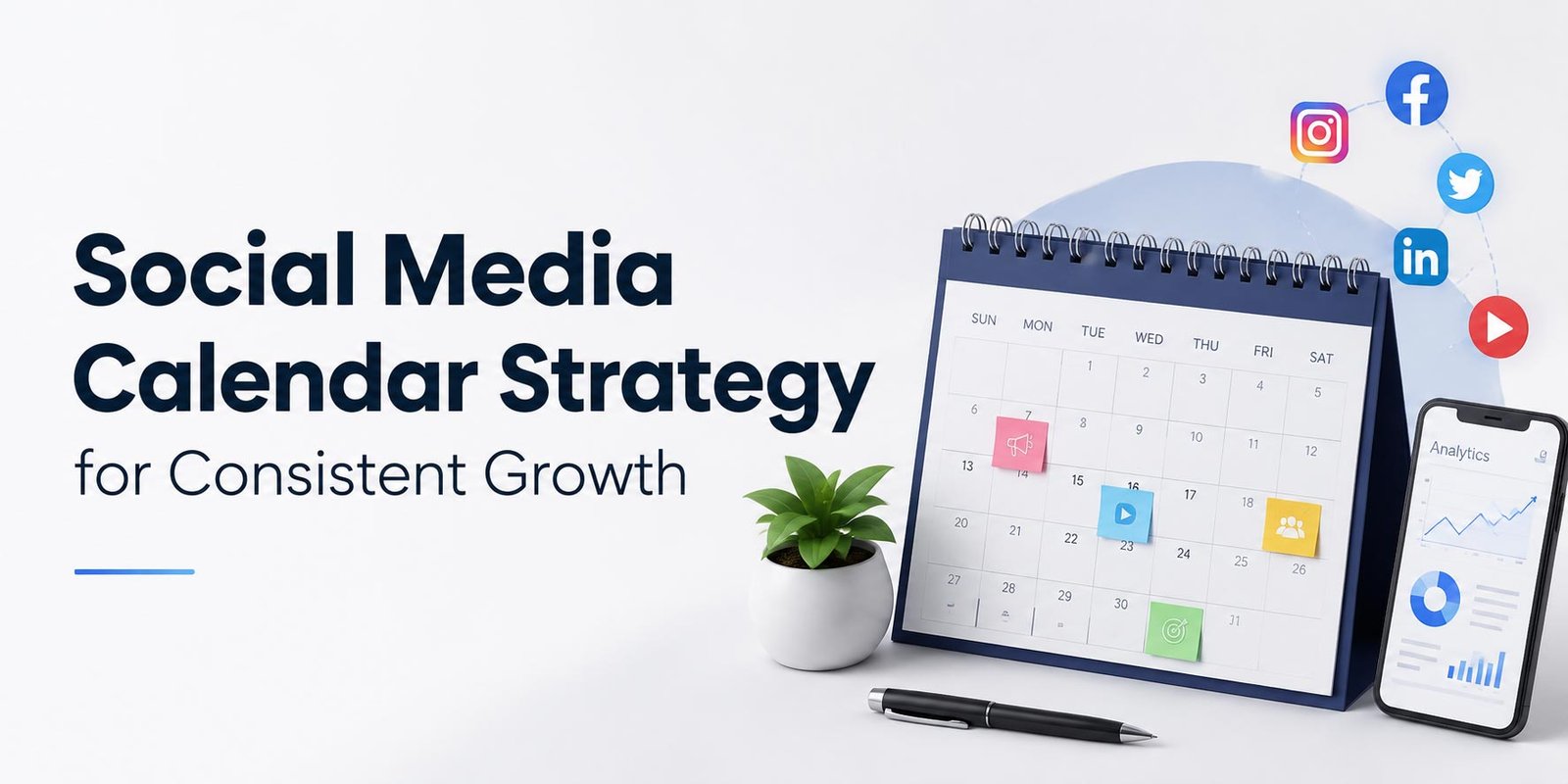
Quick Answer: A social media calendar strategy is a comprehensive blueprint that dictates what, when, and where your brand will post content across various digital platforms. By organizing themes, tracking performance metrics, and aligning daily posts with broader marketing goals, a well-structured content calendar ensures consistent brand growth, sustained audience engagement, and significantly higher conversion rates.
Why a Social Media Content Calendar is the Foundation of Digital Success
In today’s hyper-competitive digital ecosystem, posting spontaneously without a structured, data-backed plan is a recipe for digital stagnation. A meticulously crafted social media calendar strategy is no longer just a convenient organizational tool; it is an absolute necessity for businesses aiming for sustainable, long-term growth. Brands that rely on guesswork or spur-of-the-moment inspiration often experience erratic engagement drops, audience fatigue, and struggle to maintain a cohesive brand voice.
Without a strategic approach, marketing efforts become fragmented and inefficient. A documented calendar acts as your marketing team’s single source of truth, aligning your internal departments, standardizing your external messaging, and ensuring that no significant holiday, product launch, or industry event falls through the cracks. Missing out on these critical engagement windows can severely limit your brand’s reach. To understand exactly what goes wrong when planning takes a back seat, read our comprehensive analysis on why businesses fail without proper SMM. Proper planning not only mitigates these risks but transforms your social media presence from a simple broadcasting channel into a measurable growth engine.
Core Elements of a High-Performing Social Media Calendar
Building a social media calendar requires more than just mapping out dates on a spreadsheet. To optimize for generative search engines (GEO) and user intent (AEO), your strategy must incorporate several foundational elements that guarantee relevance and engagement.
1. Audience Personas and Platform Alignment
Not all social media platforms yield the same return on investment for every business model. A successful strategy begins with deeply understanding your target audience’s demographics, psychographics, and online behaviors. B2B software companies might find their highest engagement and lead generation on LinkedIn and X (formerly Twitter), whereas direct-to-consumer lifestyle brands will thrive on visually driven platforms like Instagram, TikTok, and Pinterest. Aligning your content with the specific nuances of each platform ensures that your message reaches the right eyes at the right time.
2. Strategic Content Pillars
Content pillars are a set of 3 to 5 core themes that your brand will consistently discuss, amplify, and create content around. These pillars represent your brand’s unique value proposition. Examples might include “Educational Industry Insights,” “Behind-the-Scenes Company Culture,” “Customer Success Stories,” and “Product Innovations.” By categorizing your calendar into these pillars, you ensure a balanced mix of promotional, educational, and entertaining content, preventing audience burnout from overly aggressive sales pitches.
3. Diversified Media Types and Asset Management
Modern social media algorithms heavily favor diverse and dynamic media, particularly video content. Relying solely on text-based posts or static images limits your organic reach. To maximize visibility, your calendar must specify the exact type of media asset required for each post. Understanding the technical and psychological nuances of visual content is crucial. For instance, knowing the best video formats for social media platforms allows you to tailor your assets perfectly—whether it’s a fast-paced 15-second Reel for Instagram or an in-depth, long-form tutorial for YouTube. This strategic formatting dramatically boosts algorithmic preference and user retention.
Step-by-Step Guide to Creating Your Social Media Strategy Calendar
Transitioning from a chaotic posting schedule to a streamlined social media machine requires a systematic approach. Follow these actionable steps to build a strategy rooted in Experience, Expertise, Authoritativeness, and Trustworthiness (EEAT).
Step 1: Conduct a Comprehensive Social Media Audit
Before planning future content, evaluate your past performance. Analyze your current metrics to identify which posts generated the highest engagement, click-through rates, and conversions. Document your top-performing times, formats, and topics. Additionally, audit your competitors to identify content gaps in your industry that you can uniquely fill.
Step 2: Establish Realistic, KPI-Driven Goals
Every post on your calendar must serve a specific business objective. Are you aiming to increase brand awareness, drive website traffic, generate qualified leads, or foster community engagement? Set Specific, Measurable, Achievable, Relevant, and Time-bound (SMART) goals. Link these goals to Key Performance Indicators (KPIs) such as conversion rates, share of voice, and audience growth rate.
Step 3: Develop a Posting Cadence and Workflow
Consistency is the ultimate algorithm hack. Determine a realistic posting frequency that your team can maintain without sacrificing quality. Furthermore, establish a clear workflow for content creation. Define who is responsible for copywriting, graphic design, video editing, compliance approval, and final publishing. Utilizing scheduling tools like Hootsuite, Buffer, or Sprout Social can automate the publishing phase, allowing your team to focus on community management and strategy optimization.
Step 4: Implement Agile Testing and Optimization
A social media calendar is a living document, not a rigid rulebook. Dedicate a portion of your strategy to A/B testing different headlines, call-to-actions (CTAs), visual aesthetics, and posting times. Schedule monthly review sessions to analyze the data, discard underperforming content themes, and double down on the strategies that yield the highest ROI.
Why Tech XML is the Right Choice for Your Digital Strategy
Executing a flawless social media calendar strategy requires immense time, specialized skills, and constant adaptation to ever-changing platform algorithms. This is where Tech XML steps in as your premier digital growth partner.
At Tech XML, we don’t just fill in dates on a calendar; we architect comprehensive digital ecosystems. Our team of seasoned SEO experts, creative content strategists, and data analysts work synergistically to build social media strategies rooted in empirical data and EEAT principles. We utilize advanced AI-driven analytics to predict consumer behavior, ensuring your content always stays ahead of the curve. By partnering with Tech XML, you gain access to enterprise-level marketing infrastructure, transparent ROI reporting, and a dedicated team committed to transforming your social media presence into a dominant market force.
Frequently Asked Questions (FAQs)
How far in advance should I plan my social media calendar?
Best practices suggest planning major campaigns, product launches, and seasonal events on a quarterly basis (90 days). However, detailed daily posts, captions, and exact media assets should be finalized and scheduled 2 to 4 weeks in advance. This provides enough structure for consistency while leaving room for agile, real-time trend participation.
Which metrics indicate that my calendar strategy is working?
While follower growth and likes (vanity metrics) are nice, you should focus on action-oriented metrics. Track your engagement rate (comments, shares, saves), click-through rate (CTR) to your website, lead generation conversions, and overall reach. An effective calendar strategy will show a steady upward trend in these specific KPIs over a 3 to 6-month period.
How often should a business post on social media?
Posting frequency varies by platform and industry. Generally, aim for 3-5 times a week on LinkedIn and Facebook, 1-2 times daily on Instagram (mixing Reels, Stories, and Grid posts), and 2-4 times daily on fast-moving platforms like X (Twitter) or TikTok. Quality and consistency always outweigh sheer volume.
What is the 80/20 rule in social media marketing?
The 80/20 rule is a standard content distribution strategy which dictates that 80% of your calendar content should inform, educate, or entertain your audience, while only 20% should directly promote your brand or try to sell a product. This builds trust and ensures audiences don’t tune out your promotional messages.
Ready to Dominate Your Market?
Stop wasting budget on fragmented tactics. Partner with Tech XML to build a cohesive growth machine.





Leave a Reply