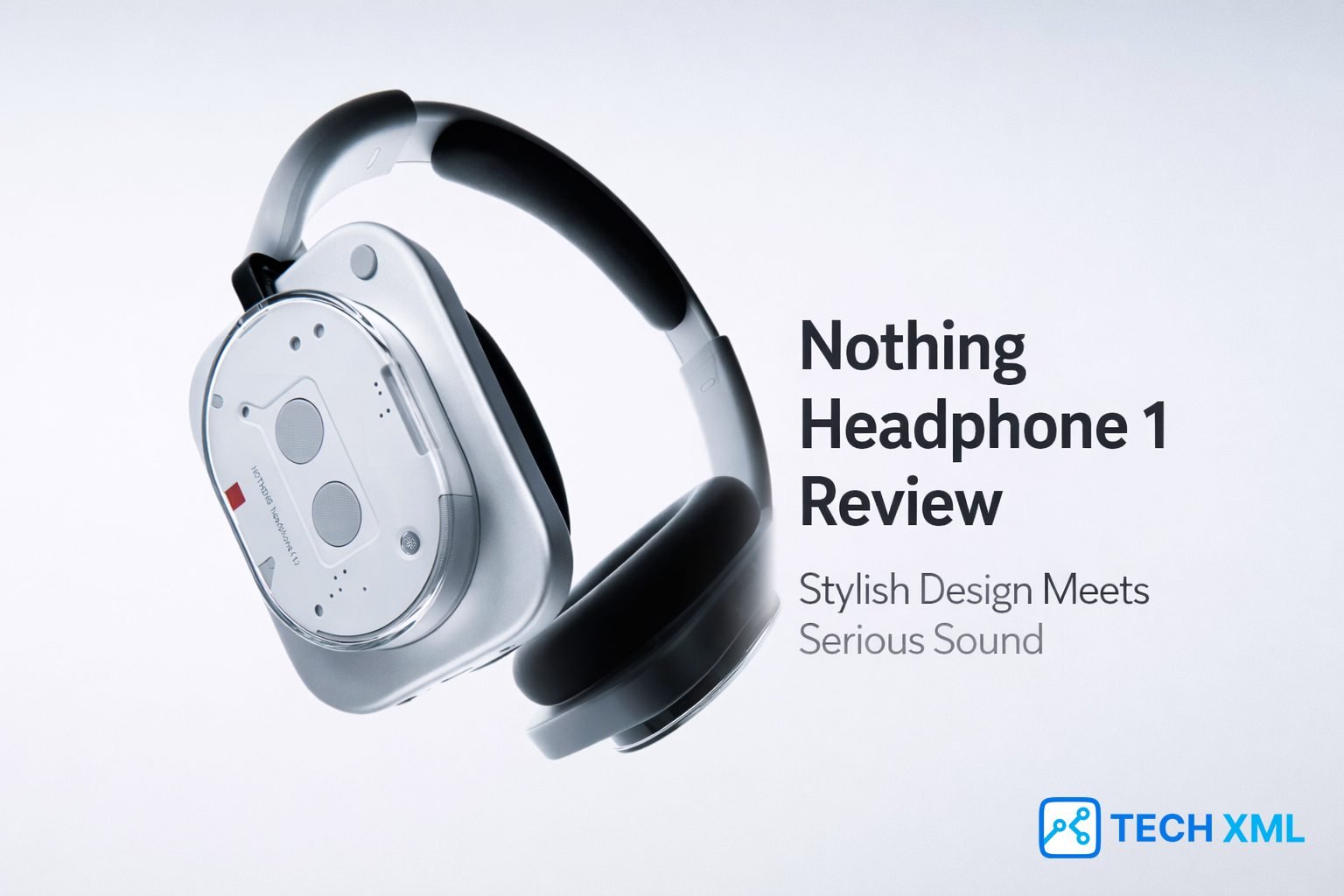
In 2026, premium audio buyers no longer chase brand identity alone. They demand measurable performance, smarter features, and honest value. This Nothing Headphone 1 Review explores whether a design-driven company can truly compete in serious audio territory.
Nothing built its reputation on transparent aesthetics and clean software thinking. However, over-ear headphones demand deeper engineering credibility. Buyers want soundstage width, refined tuning, and adaptive noise control that performs outside controlled demos. Consequently, any new flagship audio device must prove substance, not style alone.
- The Look: Iconic transparent design with Glyph Interface.
- The Sound: Balanced tuning, not bass-heavy.
- The ANC: Good for travel, but not class-leading.
The Market Shift That Changed Expectations
Audio brands once competed mainly on branding and bass-heavy tuning. Today, listeners expect balanced sound signatures, high-resolution audio support, and reliable multipoint connectivity. Therefore, the bar has moved significantly higher.
Nothing entered a segment dominated by experienced acoustic specialists like Sony and Bose. That move signals confidence, yet it also invites scrutiny. Consumers now compare audio metrics, not just brand aesthetics. As a result, transparency in design must translate into transparency in performance.
Design Language That Feels Intentional
Nothing over-ear headphones clearly extend the brand’s industrial DNA. The semi-transparent elements reveal structural layers, yet the layout feels deliberate rather than decorative. Importantly, the materials do not feel experimental in a fragile way.
The ear cups use a solid composite shell with visible detailing. Meanwhile, the headband distributes weight evenly across the crown. During extended sessions, pressure remains controlled and predictable. Comfort matters more than visual appeal, and fortunately, the cushioning feels dense without becoming warm too quickly.
Physical controls replace touch panels, improving reliability in real environments like cold weather or commutes.
Sound Performance and Tuning Philosophy
Sound defines long-term satisfaction. Testing covered acoustic jazz, electronic music, podcasts, and cinematic scores. Out of the box, tuning feels balanced rather than aggressively bass-heavy. Low frequencies carry weight but avoid muddying the midrange.
Mid frequencies sound natural and textured. Instruments like guitars hold detail without sharpness. Treble extension delivers sparkle but avoids harsh peaks. Spatial sound performance stands out during cinematic tracks, offering a wider stage than expected for closed-back wireless designs.
High-resolution audio support improves clarity, reducing compression artifacts at higher bitrates. This Nothing Headphone 1 Review confirms that tuning decisions lean toward maturity rather than hype.
Active Noise Cancellation in Real Environments
Active noise cancellation headphones must perform beyond marketing claims. Testing included metro travel, office chatter, and moderate traffic. ANC effectiveness feels adaptive; low-frequency hums fade significantly, though sharp sounds like honks remain partially audible.
Transparency mode sounds natural and less digitally processed than expected. The companion app allows fine-tuning ANC intensity, strengthening its position among premium wireless headphones 2026 offerings.
Battery Life and Everyday Reliability
Battery life remains consistent across several days of moderate listening with ANC enabled. Fast charging delivers hours of playback in a short window, reducing anxiety. Multipoint connectivity works smoothly between laptop and smartphone, a crucial detail for professionals.
Real World Usage Scenario
Morning commutes test comfort and noise control simultaneously. On a crowded train, ANC reduces ambient rumble enough to enjoy podcasts. At the office, multipoint connectivity handles calls seamlessly.
Evening streaming sessions highlight spatial sound performance again. Film dialogue stays centered, while background effects stretch outward convincingly. This reveals a product designed for real routines.
Success Story: From Skeptic to Daily Driver
Rohit Mehta from Bengaluru initially preferred a long-established audio brand. He considered Nothing headphones more aesthetic than serious. However, after two weeks, he noticed reduced listening fatigue and appreciated the balanced tuning.
Today, he uses them as his primary work headset, proving that substance backs the style.
User Reviews
Ananya, Delhi
“Visually striking yet surprisingly mature sound. Great for video calls and flights, though I wish isolation was stronger on noisy streets.”
Siddharth, Pune
“Battery consistency is the best part. I stream daily during workouts without dropouts. Bold design, solid build.”
Farah, Mumbai
“Excellent instrument separation for classical music. Extreme bass lovers might want more low-end, but I love the balance.”
Forum Discussions
Kunal, Jaipur asks:
“Is the price justified against Sony?”
Community Reply:
“Yes, if you want neutral sound and unique design. It competes well on features, even if Sony has slightly better ANC.”
Frequently Asked Questions
Does it support Hi-Res Audio?
Yes, it supports high-resolution codecs for detailed sound reproduction.
Are they comfortable for long flights?
Yes. The cushioning distributes pressure evenly, making extended sessions manageable.
How good is the ANC in traffic?
It handles consistent low noise well (engines, AC), but sharp sounds may still be audible.
Is the price competitive?
Yes. Given the build quality, sound performance, and features, it offers strong value in the premium segment.
Final Verdict
The Nothing Headphone 1 Review confirms that this product goes beyond visual experimentation. It delivers mature tuning, practical comfort, and credible ANC performance in daily scenarios. Nothing successfully transitioned from design-focused disruptor to legitimate audio contender. For buyers seeking a flagship audio device that balances personality with performance, this model deserves serious consideration. Clarity outweighs hype here, and that distinction matters in 2026.






Leave a Reply