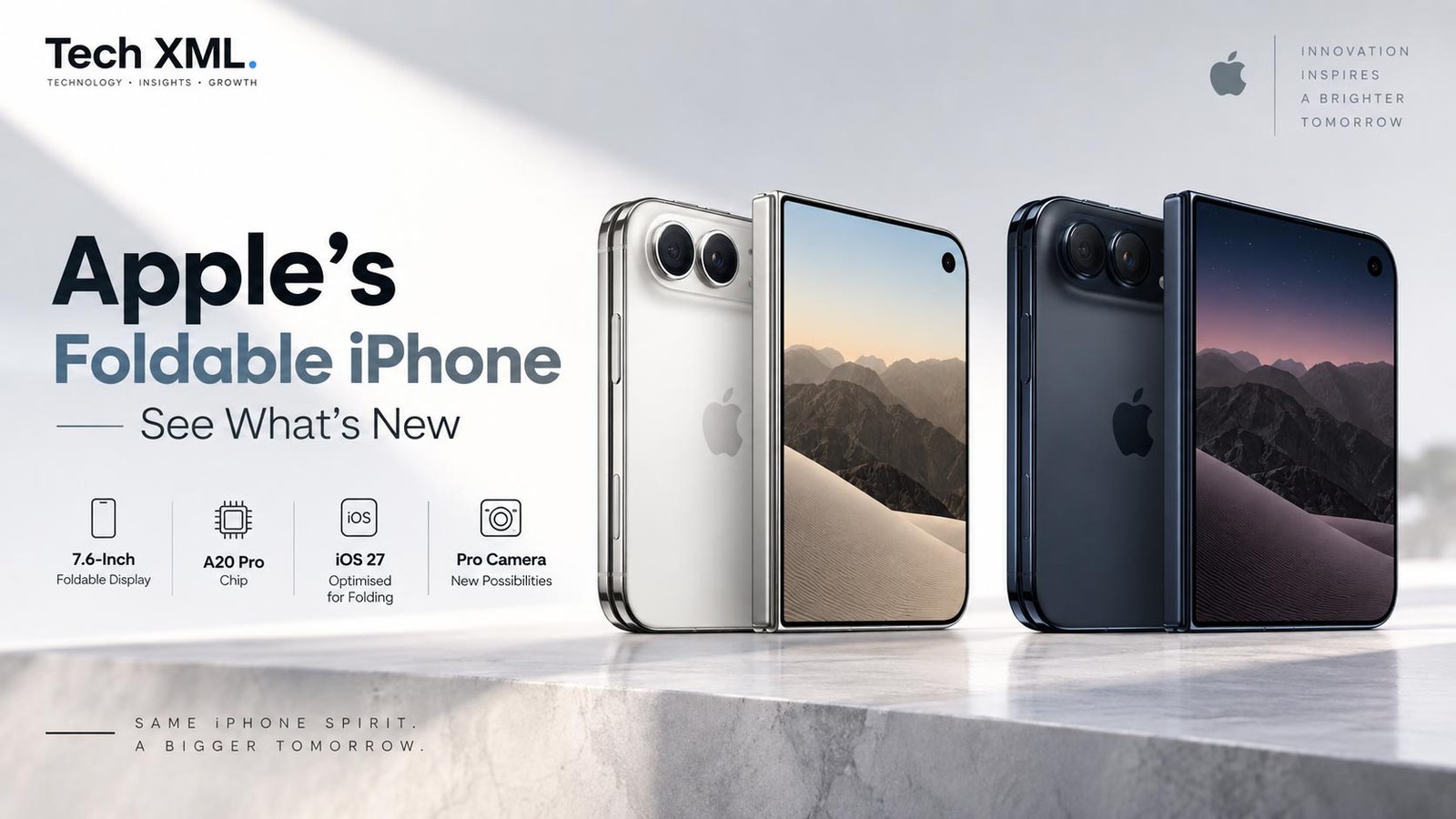
Apple has finally entered the foldable smartphone market with the iPhone Duo, its first foldable iPhone. Announced in September 2026, the device introduces a completely new form factor to the iPhone family, combining a compact outer display with a much larger foldable screen. But what makes Apple’s foldable iPhone different from existing foldable phones, and is it actually worth the premium price?
Apple’s First Foldable iPhone Is Finally Here
The iPhone Duo uses a book-style folding design rather than the smaller flip-phone format. When closed, it features a 5.4-inch outer display, while unfolding the device reveals a 7.6-inch inner display. This gives users a conventional smartphone experience when they want portability and a larger workspace when they need it.
Apple has focused heavily on making the folding experience feel like a natural extension of the iPhone rather than an experimental feature. The company has introduced a precision hinge, a thin profile and a redesigned software experience intended specifically for the foldable form factor.
What’s New in Apple’s Foldable iPhone?
7.6-Inch Foldable Display
The biggest attraction is the 7.6-inch inner display. It provides substantially more screen space for watching videos, gaming, browsing websites, editing content and multitasking. Apple has also introduced a nano-texture finish designed to reduce glare, making the larger screen more practical in different lighting conditions.
5.4-Inch Outer Display
Users don’t have to unfold the phone for every task. The 5.4-inch outer display is designed for everyday activities such as checking messages, making calls, browsing notifications and quickly accessing apps. Apple says the outer screen offers more than 90% of the display area of the iPhone 18 Pro.
A20 Pro Chip and Thermal Management
The iPhone Duo is powered by Apple’s A20 Pro chip. Because foldable phones have more demanding thermal and battery requirements, Apple has incorporated advanced thermal management, including a custom vapour chamber and dual-battery architecture. This is intended to maintain consistent performance during demanding tasks.
iOS 27 Optimised for Folding
Hardware alone doesn’t make a good foldable phone. Apple has redesigned elements of iOS 27 to take advantage of the larger internal display. Users can make better use of the additional screen space for multitasking, productivity, entertainment and different viewing orientations.
Apple Intelligence and Siri AI are also part of the software experience, bringing Apple’s latest AI capabilities to the foldable iPhone. This combination of hardware and software could ultimately be more important than the folding mechanism itself.
Design, Camera and Durability
The iPhone Duo uses a titanium frame and Ceramic Shield materials, with an IP68 rating for dust and water resistance. Apple has also used a folding design engineered for repeated opening and closing while keeping the device exceptionally thin when unfolded.
The camera system is designed around the flexibility of the foldable form factor. Users can take advantage of different positions and angles while capturing photographs or video, potentially making the device useful for creators and social media professionals.
For people working with digital content, the larger display could also make reviewing and editing footage more convenient. If you’re interested in improving your video workflow, read our guide on video editing mistakes to avoid.
Why Apple’s Foldable iPhone Matters
Apple is relatively late compared with Samsung and other manufacturers that have already released multiple generations of foldable smartphones. But that delay could work in Apple’s favour. The company has had years to study existing foldable designs, identify their weaknesses and develop its own approach.
The iPhone Duo effectively combines a smartphone and a larger productivity device into one product. You can keep it folded for normal communication and unfold it when you need more screen real estate. For travellers, professionals, content creators and heavy smartphone users, that flexibility could be genuinely useful.
And the timing is interesting. As traditional smartphones become increasingly similar in design, foldable displays offer manufacturers a major opportunity to differentiate premium devices. This shift also connects with broader developments in digital design and user experience. For additional insights, explore our guide to graphic design trends in 2026.
iPhone Duo Price and Availability
Apple has positioned the iPhone Duo firmly in the premium smartphone category. The device starts at $1,999 for the 256GB model, with higher-storage configurations available at additional cost.
Apple says pre-orders begin on October 16, 2026, with general availability starting on October 23, 2026. Pricing and availability may vary by country and region.
The price clearly puts the iPhone Duo beyond the reach of many mainstream smartphone buyers. So the real question isn’t simply whether the phone is technically impressive. It’s whether the foldable experience provides enough everyday value to justify the additional cost.
Why Tech XML Is the Right Choice
Technology moves quickly, and understanding what actually matters behind every new launch can be difficult. Tech XML focuses on technology, digital marketing, design and emerging trends with an emphasis on practical, easy-to-understand information.
Our goal isn’t simply to repeat specifications. We look at how technology affects users, businesses, creators and digital experiences. That means readers can find useful context alongside the latest information instead of having to sort through technical jargon themselves.
For businesses, Tech XML also understands that technology and digital growth work together. A strong online presence requires more than isolated tactics. Content, SEO, design, user experience and digital strategy need to work as one system.
Frequently Asked Questions About Apple’s Foldable iPhone
What is Apple’s foldable iPhone called?
Apple’s first foldable iPhone is called the iPhone Duo.
What is the screen size of the iPhone Duo?
The iPhone Duo has a 5.4-inch outer display and a 7.6-inch inner foldable display.
What processor does the foldable iPhone use?
The iPhone Duo is powered by Apple’s A20 Pro chip, supported by advanced thermal management.
Does the iPhone Duo support multitasking?
Yes. iOS 27 has been optimised for the foldable design, allowing users to take better advantage of the larger internal display for multitasking and productivity.
How much does Apple’s foldable iPhone cost?
The iPhone Duo starts at $1,999 for 256GB in the United States. Regional prices may differ.
When will the iPhone Duo be available?
Pre-orders are scheduled to begin on October 16, 2026, followed by availability from October 23, 2026.
Is the iPhone Duo water resistant?
Yes. Apple has given the iPhone Duo an IP68 rating for dust and water resistance.
Is Apple’s foldable iPhone worth buying?
It depends on how much value you place on a larger foldable display and Apple’s ecosystem. For users who frequently multitask, consume media or need a larger mobile workspace, the iPhone Duo could be compelling. For people who mainly use their phone for calls, messaging and basic apps, a conventional iPhone may offer better value.
Final Verdict
Apple’s foldable iPhone is a significant change for the iPhone lineup. The iPhone Duo combines a 5.4-inch outer display, a 7.6-inch foldable screen, A20 Pro performance and software designed specifically around the folding experience.
Its biggest advantage is flexibility: one device can function as a compact smartphone and then transform into a much larger workspace when required. The premium price, however, means it isn’t an obvious choice for everyone.
Still, Apple’s arrival could accelerate the next phase of smartphone design. And if the company can make foldable technology feel as effortless as using a traditional iPhone, the iPhone Duo may prove to be much more than an expensive experiment.
Ready to Dominate Your Market?
Stop wasting budget on fragmented tactics. Partner with Tech XML to build a cohesive growth machine.






Leave a Reply