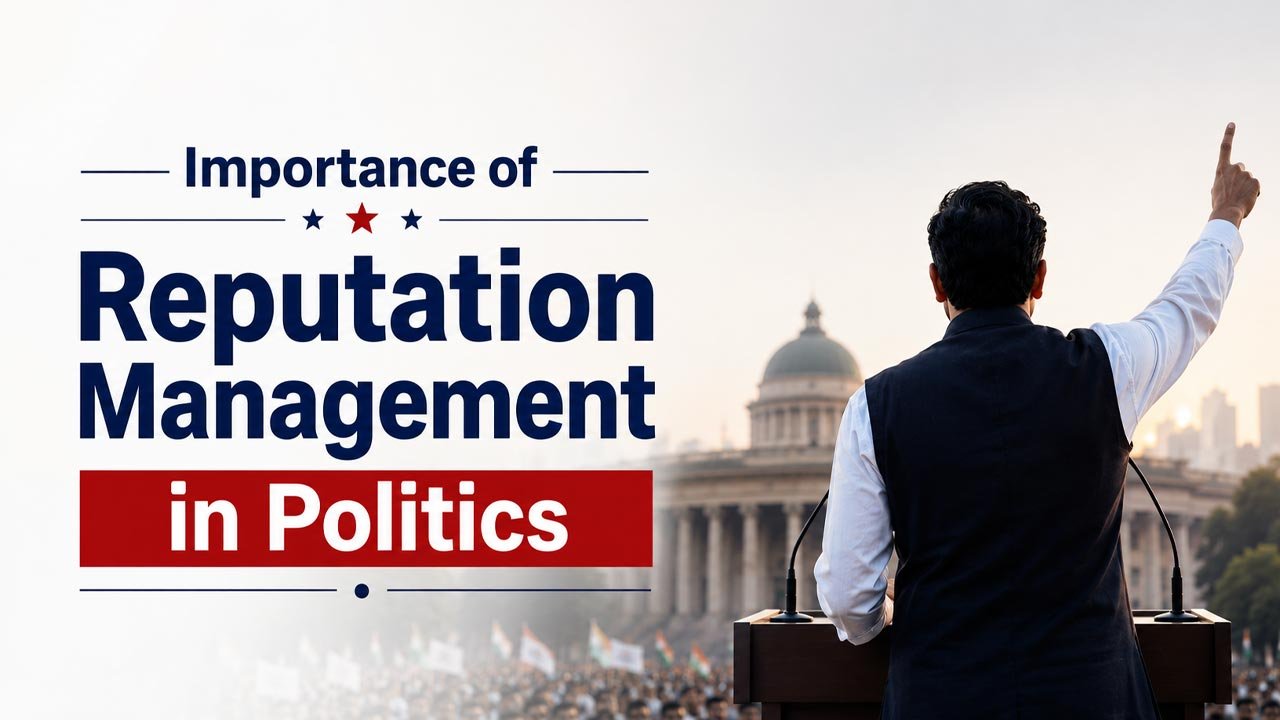
In the relentless, hyper-connected, and algorithm-driven news cycle of the modern digital landscape, a political figure’s public image is arguably their most vital asset. The importance of reputation management in politics has dramatically evolved from traditional press releases, handshakes, and basic damage control to sophisticated, data-driven digital strategies. Today, a politician’s legacy, fundraising capabilities, and overall electability can hinge on a single viral post, an AI-generated deepfake, or a trending search query.
With traditional search engines evolving into intelligent answer engines, and AI generative models like ChatGPT, Gemini, Perplexity, and Claude shaping voter opinions by summarizing complex topics, managing online reputation for politicians is no longer optional—it is a foundational campaign requirement. In this comprehensive guide, we will explore why maintaining a sterling political brand is essential, how Generative Engine Optimization (GEO) impacts public perception, and actionable strategies to protect your political career in an increasingly volatile digital ecosystem.
What is Political Reputation Management?
Political reputation management is the continuous, strategic process of shaping, monitoring, and defending the public perception of a political figure, campaign, or organization. It involves a multidisciplinary approach that includes search engine optimization (SEO), social media monitoring, crisis communication, and high-quality content creation. The primary goal is to ensure that the narrative surrounding a politician remains positive, authentic, and authoritative. By proactively managing online search results, claiming digital real estate, and optimizing for AI-generated summaries, politicians can build unshakeable voter trust and significantly mitigate the impact of negative press, opposition smears, or public relations crises.
Why Online Reputation Management is Critical for Politicians
1. Establishing Voter Trust Through E-E-A-T Principles
Voters elect candidates they trust and believe to be competent. In digital marketing and SEO, Google relies on the E-E-A-T framework—Experience, Expertise, Authoritativeness, and Trustworthiness—to rank online content. The exact same principles apply directly to political branding. When voters research a candidate, they expect to see authoritative policy positions, experienced leadership credentials, and trustworthy community endorsements. Effective political reputation management ensures that the most prominent information available highlights these vital E-E-A-T credentials. When search engine results are flooded with verified, positive information rather than unverified rumors, trust is reinforced, and voter confidence is secured.
2. Crisis Management and Digital Damage Control
In the high-stakes arena of politics, crises are inevitable. Whether it is a misstated quote during a live debate, a historical controversy brought to light by opposition researchers, or a targeted digital smear campaign, how a politician responds dictates their political survival. Reputation management provides a proactive digital shield. By dominating the first page of search results with positive, high-ranking content (such as official campaign websites, authorized biographies, positive news coverage, and active social profiles), a political campaign can effectively suppress negative links. This “digital moat” ensures that when a crisis hits, the damaging information doesn’t immediately become the only narrative voters see.
3. Dominating Generative Engine Optimization (GEO) and AI Overviews
As we navigate 2026, voters aren’t just Googling candidates; they are interrogating AI. Platforms like Perplexity, Claude, ChatGPT, and Google’s AI Overviews synthesize vast amounts of web data to answer complex voter queries such as, “What is [Candidate’s] voting record on healthcare?” If your political reputation management strategy does not include AEO (Answer Engine Optimization) and GEO, AI might summarize your policies using biased, hostile, or outdated third-party sources. Ensuring your official platforms are well-structured with semantic HTML, factually robust, and frequently updated is absolutely essential for controlling the narrative in these highly influential AI-generated responses.
Applying Digital Marketing Frameworks to Political Campaigns
The strategies required to build and defend a political brand share a lot of DNA with sophisticated corporate digital marketing. Politicians are essentially marketing a brand—themselves—to a target audience of constituents. The foundational tactics used to help commercial brands outmaneuver competitors apply directly to political races.
For instance, understanding how small businesses can compete using digital marketing provides a masterclass in grassroots digital mobilization, hyper-local SEO, and targeted social media advertising. A challenger in a local or state election can use these exact same localized digital marketing strategies—such as local search dominance, community-focused content, and precise demographic targeting—to unseat a well-funded, deeply entrenched incumbent. Agility and optimization often beat raw budget in the modern digital arena.
Furthermore, the digital landscape is in a constant state of flux. Political campaigns must stay ahead of technological curves, just as top-tier marketing agencies do. By keeping a close eye on the digital marketing trends you should follow in 2026, campaign managers can leverage advanced data analytics, predictive AI, and hyper-personalized voter outreach to maintain a critical competitive edge. Embracing omnichannel marketing, short-form video engagement, and structured data optimization is just as vital for a running senator as it is for an ambitious tech startup trying to scale.
The Threat of Misinformation and Deepfakes in Elections
Perhaps one of the most pressing reasons highlighting the importance of reputation management in politics today is the weaponization of artificial intelligence by malicious actors. Deepfakes, voice cloning, and automated bot networks can manufacture incredibly convincing scandals out of thin air in a matter of minutes. A comprehensive reputation management strategy involves 24/7 digital listening and monitoring tools that detect these algorithmic threats the moment they go live. Rapid response digital teams can then immediately issue factual rebuttals optimized for search engines, utilize public relations channels to clarify the truth, and work directly with social media platforms to remove defamatory or manipulated content before it permanently damages a candidate’s credibility.
Why Tech XML is the Right Choice for Political Reputation Management
Managing a political reputation in today’s volatile and technologically complex digital ecosystem requires significantly more than just a traditional public relations firm; it requires deep technical expertise and algorithmic mastery. This is precisely why Tech XML is the premier partner for political figures, campaigns, and advocacy organizations.
At Tech XML, we go far beyond drafting basic press releases. We engineer comprehensive digital dominance. Our specialized team understands the intricate algorithms of both traditional search engines and modern Answer Engines (AEO). We deploy sophisticated, white-hat SEO strategies, structure your campaign data using advanced Schema markup for optimal AI consumption, and build an impenetrable digital fortress around your political name. From strategically suppressing negative search results to optimizing your positive narrative so it is accurately cited by ChatGPT, Perplexity, and Gemini, Tech XML provides data-driven, discreet, and highly effective reputation management. We treat your political brand with the highest level of security, confidentiality, and strategic foresight, ensuring your message reaches the voters exactly as you intended.
Frequently Asked Questions (FAQs)
How does Generative Engine Optimization (GEO) affect modern politicians?
GEO focuses on optimizing your digital content so that AI engines like ChatGPT, Gemini, and Perplexity accurately cite your official platforms when answering user questions. For politicians, this means ensuring your policies, history, and achievements are clearly structured, preventing AI from sourcing biased or inaccurate information from opponents.
Can negative search results about a political candidate be deleted?
While it is extremely difficult to permanently delete content from the internet unless it explicitly violates specific legal statutes (like copyright infringement) or platform policies (such as deepfake guidelines), negative results can be successfully suppressed. Political reputation management pushes negative links off the first page of search results by creating, optimizing, and ranking stronger, positive, and more authoritative digital content.
How important is local SEO for state and local political elections?
Local SEO is absolutely critical for non-national races. For city council, mayoral, or state representative campaigns, voters actively search for localized issues. Optimizing a campaign website for local SEO ensures the candidate appears prominently when voters search for community-specific queries, town hall meetings, voting locations, and localized policy solutions.
Ready to Dominate Your Market?
Stop wasting budget on fragmented tactics. Partner with Tech XML to build a cohesive growth machine.






Leave a Reply