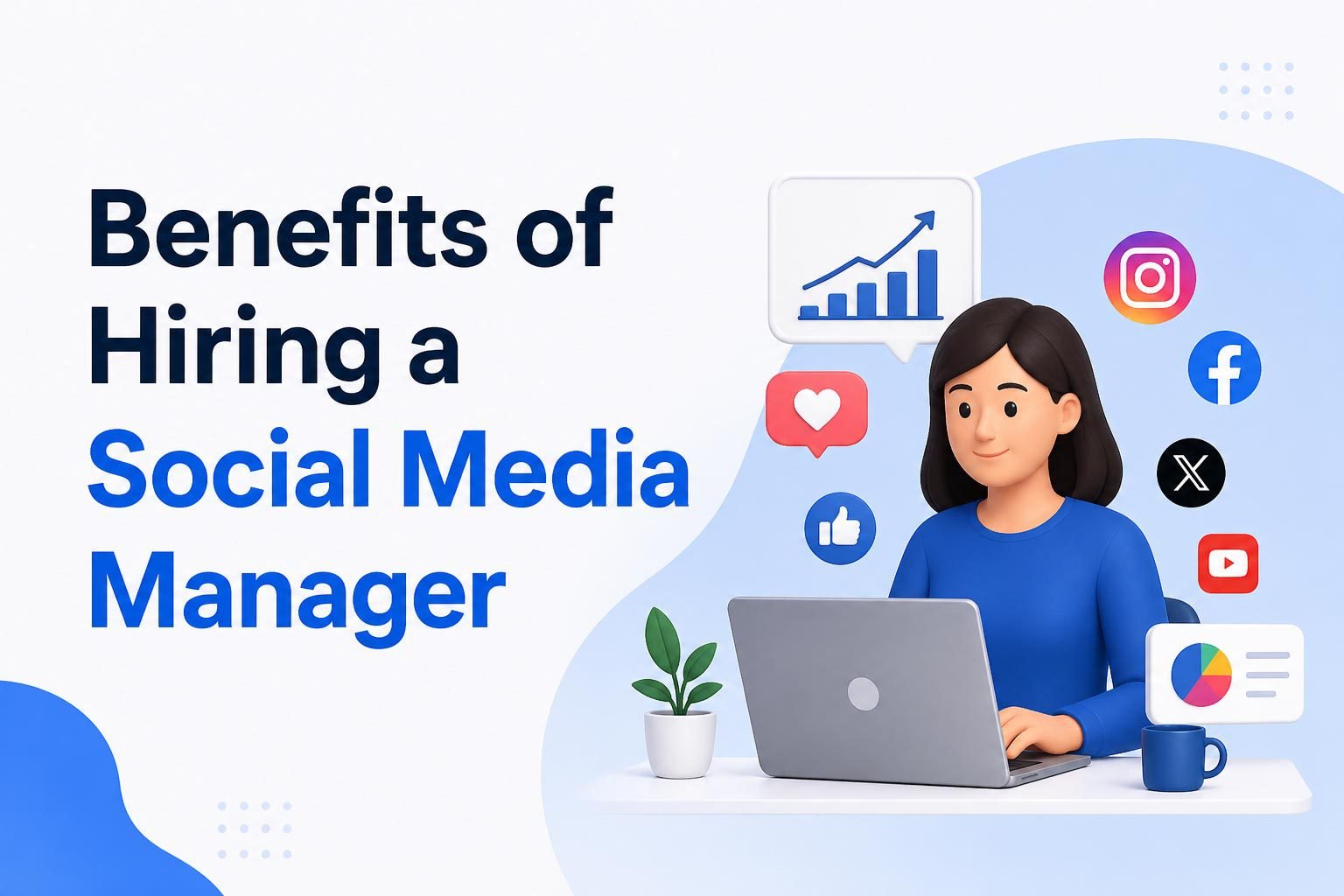
A social media manager is no longer a luxury role in 2026. It has become a functional necessity for businesses trying to stay visible and relevant online.
Most brands today post regularly, yet results feel inconsistent. Some see sudden spikes in engagement, while others struggle to maintain reach even with frequent activity.
The problem rarely lies in effort. It usually comes down to lack of structure, unclear direction, and absence of strategy.
This is where the role of a social media manager becomes important. Instead of guessing what works, businesses begin operating with clarity and purpose.
- Structured content strategy replaces random posting
- Improved audience targeting and engagement consistency
- Time saving with better operational focus
- Data driven decisions improve performance clarity
- Long term brand growth becomes measurable and scalable
- The Social Media Shift in 2026
- What a Social Media Manager Actually Does
- Core Benefits
- Strategic Impact
- Real World Scenario
- Success Story
- User Reviews
- Forum Discussions
- FAQs
- Conclusion
The Social Media Shift in 2026
Social media platforms have evolved significantly over the last few years. Algorithms now reward consistency, relevance, and meaningful engagement rather than random posting.
At the same time, users have become more selective. They engage with brands that communicate clearly and consistently.
This shift has made casual posting ineffective. Businesses that rely on trial and error often lose visibility without understanding the reason.
As a result, structured planning, audience targeting, and performance tracking are now essential components of digital growth.
What a Social Media Manager Actually Does
There is still a misconception that a social media manager only schedules posts. In reality, the role is far more comprehensive.
A social media manager builds and executes a social media marketing strategy. This includes content planning, audience research, performance analysis, and continuous optimization.
They ensure that every piece of content aligns with the brand voice. Over time, this consistency creates stronger recognition and trust.
Instead of reacting to trends randomly, the manager creates a structured system that delivers predictable outcomes.
Core Benefits
Consistent Brand Voice
Consistency plays a critical role in digital communication. When content follows a unified tone, audiences begin to recognize the brand more easily.
A social media manager ensures this consistency across all platforms. This builds familiarity, which gradually leads to trust.
Data Driven Decisions
Decisions based on assumptions often lead to inconsistent results. Data driven insights, however, provide clarity on what works and what needs improvement.
A social media manager uses analytics to guide strategy. This reduces guesswork and improves overall performance.
Time and Resource Efficiency
Managing social media internally can consume significant time. Teams often struggle to balance content creation, engagement, and analysis.
Hiring a social media manager allows businesses to focus on core operations. This improves productivity across departments.
Stronger Audience Engagement
Engagement reflects how well a brand connects with its audience. It goes beyond likes and comments.
With structured content and better targeting, a social media manager builds meaningful interactions that drive long term loyalty.
Scalable Growth Strategy
Growth on social media requires consistency and adaptability. It rarely happens instantly.
A social media manager creates a system that evolves with performance insights. This ensures steady and scalable growth over time.
Strategic Impact
Social media has become a core component of business growth. It directly influences brand perception, trust, and customer decisions.
A strong online presence often impacts buying behavior even before direct communication occurs.
When managed strategically, social media contributes to lead generation and long term brand value.
This shift has changed how businesses approach digital investment and resource allocation.
Real World Scenario
Consider a small e-commerce brand struggling with inconsistent engagement. Despite regular posting, results remain unpredictable.
After hiring a social media manager, the approach becomes structured. Content aligns with audience expectations, and performance tracking improves.
Within a few months, engagement stabilizes. Growth becomes consistent rather than sporadic.
This demonstrates how structured management transforms outcomes over time.
Success Story
A fitness startup experienced declining reach despite active posting. Their content lacked direction and failed to connect with the audience.
They hired a social media manager to redesign their strategy. The focus shifted toward audience needs and clearer messaging.
Within six months, engagement doubled. Conversion rates improved as content became more relevant.
The key improvement was not content volume, but strategic clarity.
For businesses looking to implement a structured approach, platforms like Social Media Manager solutions by Tech XML offer practical direction.
User Reviews
Rahul Mehta, Mumbai
I managed social media myself for years, but results stayed inconsistent. After hiring a manager, engagement improved and content finally felt structured.
Sarah Khan, Dubai
We believed ads were the issue, but it turned out to be strategy. A social media manager helped us understand what actually works.
Daniel Brooks, London
The biggest change was consistency. Earlier, our posts felt random. Now they align with our brand and audience expectations.
Forum Discussions
Question: Amit Sharma, Delhi
Is hiring a social media manager worth it for a small business with limited budget?
Community Reply: Neha Verma, Jaipur
If social media plays an important role in your growth, structured management saves time and improves results over time.
Question: Jason Lee, Singapore
Can tools replace a social media manager?
Community Reply: Arjun Patel, Ahmedabad
Tools assist with scheduling and analytics, but they cannot replace strategy and decision making.
FAQs
When should a business consider hiring a social media manager?
Businesses should consider hiring when social media starts impacting growth but lacks consistency. Structured management helps improve clarity and performance.
Is hiring a social media manager expensive for startups?
Costs vary depending on expertise and scope. However, the focus should remain on return on investment rather than upfront expense.
Can a social media manager guarantee growth?
No professional can guarantee results. However, a structured strategy significantly improves the chances of consistent growth.
How is a social media manager different from an agency?
A manager focuses on a single brand with deeper involvement, while agencies manage multiple clients and may offer less personalized strategies.
What skills should a good social media manager have?
They should understand content strategy, analytics, audience behavior, and brand positioning while adapting quickly to changing trends.
Conclusion
Hiring a social media manager is not just about delegating tasks. It is about building a structured system for communication and growth.
In 2026, where competition is high and attention spans are limited, clarity and consistency matter more than ever.
Businesses that adopt a structured approach tend to grow more predictably. Those that rely on random efforts often struggle to scale.
The decision ultimately depends on business goals. However, for most growth focused brands, professional social media management is becoming essential.





Leave a Reply