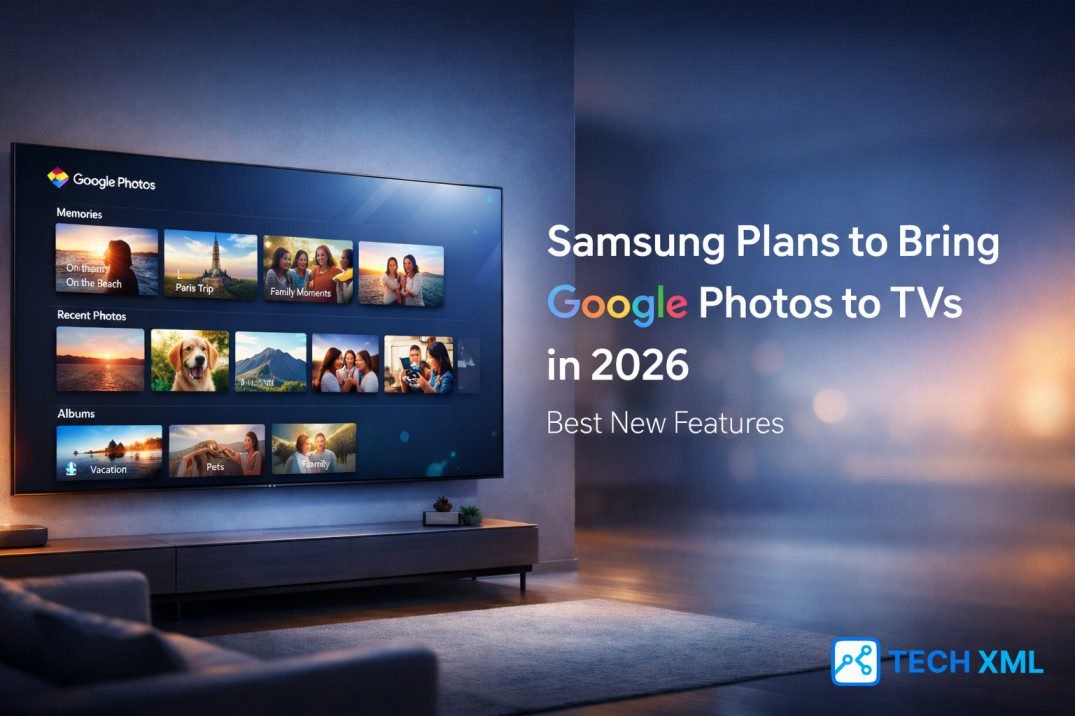
Living rooms no longer feel limited to movies or sports, because personal memories now demand space, comfort, and calm shared viewing experiences. That curiosity explains why Google Photos on Samsung TVs feels so relevant as 2026 approaches, especially for families tired of passing phones around.
Photos already live in the cloud, yet people still struggle to enjoy them together without awkward screen sharing or cables. Therefore, this update promises clarity, comfort, and a more natural way to relive moments at home.
- The News: Native Google Photos integration coming to Samsung TVs.
- The Benefit: No more casting, cables, or passing phones around.
- The Feature: AI-sorted memories and ambient slideshow modes.
What Google Photos on Samsung TVs Means in 2026
This update signals a shift in how televisions function within everyday life rather than focusing only on entertainment. With Google Photos on Samsung TVs, the television becomes a shared memory screen instead of a passive display.
Rather than opening phones repeatedly, families can view albums calmly during gatherings or quiet evenings. As a result, the TV starts feeling personal while remaining familiar and easy to control.
Why TV Based Photo Viewing Is Evolving
Phones feel personal, yet they feel limiting when memories deserve space and attention. Meanwhile, televisions sit unused for large parts of the day despite their visual comfort.
Because families spend time together in living rooms, photo viewing naturally shifts there. Therefore, TV-based photo viewing evolves as habits move toward shared experiences.
How This Update Fits Modern Living Rooms
Modern living rooms balance work, relaxation, and family time within one space. Accordingly, Google Photos fits into idle screens, background moments, and focused viewing sessions.
Whether guests arrive or evenings slow down, memories appear naturally without effort. Thus, the Smart TV becomes part of daily life instead of demanding attention.
Expected Core Features of Google Photos on Samsung TVs
The experience focuses on simplicity rather than overwhelming feature lists. Instead, features aim to feel invisible while enhancing comfort and control.
Users expect smooth access, clear visuals, and familiar organization. Consequently, the update prioritizes usability over novelty.
Seamless Google Account Sync
Signing in should feel familiar for anyone already using Google services. Once connected, existing photo libraries appear without extra setup steps.
Because syncing happens securely, users avoid repeated logins or manual transfers. Therefore, access feels immediate and stress-free.
AI Powered Photo Sorting on TV
Artificial intelligence helps surface memories without forcing manual browsing. Photos organize by people, places, or moments already recognized by Google Photos.
On a TV, this matters because navigation feels slower than phones. Thus, AI reduces effort while keeping control intact.
Ambient and Slideshow Modes
When the TV stays idle, photos can appear softly without distraction. Slideshow modes transform walls into living memory spaces.
Instead of static screens, visuals change gently. As a result, photos blend into daily life rather than interrupt it.
User Control and Privacy on Big Screens
Privacy concerns feel stronger on shared screens than personal devices. Therefore, user control becomes essential for trust.
Samsung and Google understand that families share televisions with guests. Hence, privacy options remain visible, adjustable, and easy to understand.
Profile Based Photo Access
Profiles allow different users to keep boundaries clear. Each household member controls what appears on screen.
Because profiles stay separate, accidental exposure becomes less likely. Thus, comfort increases without complexity.
Guest Viewing and Privacy Settings
Guest modes limit access quickly during visits. Sensitive albums stay hidden unless permitted intentionally.
With simple toggles, users feel confident hosting gatherings. Therefore, privacy supports social comfort.
How It Compares to Current TV Photo Options
Traditional photo viewing methods feel outdated and inconvenient. USB drives require preparation, while local storage lacks flexibility.
Cloud-based access changes expectations entirely. Consequently, convenience becomes the deciding factor.
Difference from USB and Local Gallery Viewing
USB viewing demands manual copying and repeated updates. Local galleries also feel disconnected from phone libraries.
By contrast, cloud access updates automatically. Therefore, effort drops while access improves.
Cloud vs Device Based Photo Experience
Cloud libraries scale easily across years of memories. Devices struggle with storage limits and manual organization.
With cloud access, consistency remains intact. Thus, long-term usage feels smoother and more reliable.
Latest Tech Updates:
- Your First Apartment Gadgets: Best Essentials [2026]
- Tech Trends 2026: Why These 5 Changes Will Shock You
- Best AI-Powered Dictation Apps of 2026: The Ultimate List
- Launcher App Development: Best Guide to Build the Next Nova [2026]
- Data Analytics Trends 2026: Why Big Data Is Finally Dead
Success Story: From Phone Gallery to Shared Family Screen
Rohit from Jaipur often struggled to show travel photos during family dinners. Passing his phone around broke conversations and felt awkward.
After enabling Google Photos on Samsung TVs, evenings changed naturally. Photos played softly while conversations continued.
His parents enjoyed reliving memories without asking questions. Meanwhile, Rohit felt relaxed knowing privacy controls stayed active. That simple shift turned memories into shared moments rather than interruptions.
Real User Reviews
Ananya Verma, Bengaluru
“Viewing photos on a large screen finally feels comfortable and natural. The experience feels calm, organized, and respectful of privacy.”
Karan Mehta, Mumbai
“I stopped using USB drives completely. Cloud access feels faster and cleaner for family gatherings.”
Neha Singh, Noida
“Guest controls matter a lot in shared homes. This setup makes hosting stress-free and enjoyable.”
Forum Style Discussions
Rahul Sharma, Delhi asks:
Will guests accidentally see private photos during visits?
Community response:
Guest modes limit access instantly. Private albums remain hidden unless manually allowed.
Priya Nair, Kochi asks:
Does this require constant internet connectivity?
Community response:
An active connection improves access. However, controls manage data usage efficiently.
Frequently Asked Questions
Is Google Photos on Samsung TVs available for all models?
Availability depends on software support and model year. Newer smart TVs receive priority, while older models may follow later updates.
Does this feature require a paid Google Photos plan?
Basic access works with standard accounts. However, larger libraries may depend on existing storage plans.
Can multiple Google accounts connect to one TV?
Yes, profile support allows separate accounts. Each user controls visibility independently.
How secure is photo access on shared screens?
Security relies on account authentication and profile separation. Users control permissions at all times.
Will photos affect TV performance?
The app runs lightly in the background. Performance remains smooth during normal viewing.
Final Thoughts on Google Photos on Samsung TVs in 2026
This update reflects how technology adapts quietly to human habits. Google Photos on Samsung TVs feels less like a feature and more like a lifestyle adjustment.
By focusing on comfort, privacy, and shared experiences, Samsung and Google set realistic expectations. Instead of pushing novelty, they support everyday moments naturally.
For households that value memories as much as entertainment, this change feels timely and thoughtful. Ultimately, the living room becomes a space for connection rather than consumption.






Leave a Reply