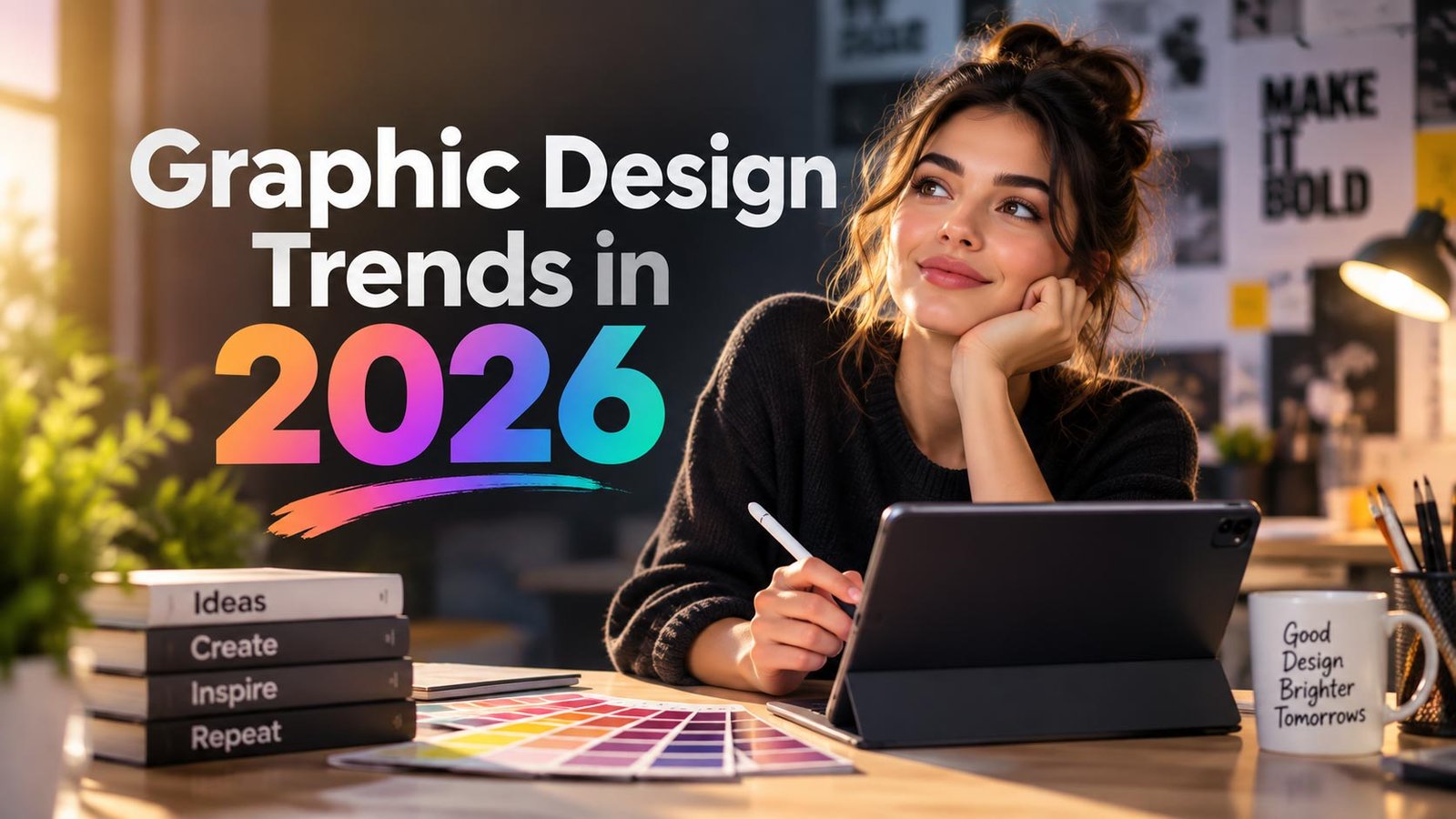
The landscape of digital art and branding has undergone a radical transformation in 2026. With artificial intelligence deeply integrated into creative workflows and augmented reality becoming an everyday baseline expectation, brands face a unique, multifaceted challenge: standing out in a highly saturated, visually demanding market. The graphic design trends in 2026 focus heavily on creating immersive, hyper-personalized experiences that resonate seamlessly across all digital platforms. Leveraging these cutting-edge trends is absolutely crucial for establishing long-term brand authority, demonstrating verified industry expertise, and capturing fragmented consumer attention in a world dominated by rapid scrolling. As search engines evolve into complex answer engines, your visual identity is no longer just about aesthetics; it is a fundamental pillar of your overall digital survival strategy.
Why Keeping Up with 2026 Graphic Design Trends Matters for SEO
In today’s fast-paced digital ecosystem, user attention is the most valuable currency. Generative Engine Optimization (GEO) and Answer Engine Optimization (AEO) now strictly require brands to produce content that is flawlessly optimized both textually and visually. Advanced AI models and search algorithms—including ChatGPT, Gemini, Perplexity, Claude, and Google’s AI Overviews—continuously evaluate the structural and visual quality of a webpage to determine its Experience, Expertise, Authoritativeness, and Trustworthiness (E-E-A-T). By proactively adopting the latest 2026 design trends, you directly signal to these complex algorithms that your brand is deeply invested in providing superior user experiences. High-quality, optimized visual assets fundamentally improve core engagement metrics, drastically lower bounce rates, and significantly increase total time-on-page. These are critical, heavily weighted ranking factors for securing top-tier positions in modern AI Overviews and traditional Search Engine Results Pages (SERPs). Neglecting visual evolution means risking algorithmic invisibility.
Top Graphic Design Trends Shaping 2026
1. Hyper-Personalized AI-Driven Generative Design
The single most significant shift in 2026 design trends is the rapid transition toward hyper-personalized, dynamic visual experiences. Driven by highly advanced machine learning algorithms, websites now dynamically adjust their core aesthetics—such as primary color palettes, background imagery, and layout structures—based on real-time user behavior, demographic data, and explicit preferences. For modern marketing professionals, this AI-driven generative design strategy leads to exponentially higher conversion rates. By perfectly aligning visual elements with granular user data, brands ensure their core offerings resonate perfectly with the individual viewer on a psychological level. This deeply personalized approach fosters unparalleled brand loyalty, builds immediate trust, and actively reduces the friction typically associated with the digital buyer’s journey.
2. Immersive 3D and Spatial Computing Aesthetics
With the widespread mainstream adoption of spatial computing devices and advanced mixed-reality headsets, flat 2D design is rapidly giving way to highly immersive 3D aesthetics. The 2026 digital landscape demands deep spatial awareness, where on-screen digital elements possess actual depth, tangible textures, and interactive physics. We are currently witnessing a massive, industry-wide surge in floating user interfaces, interactive micro-animations, and holographic typography that respond intuitively to user eye-tracking and hand gestures. Brands explicitly incorporating these spatial 3D elements into their core digital presence create interactive, deeply memorable environments that drastically outperform traditional flat web pages. This shift transforms passive content browsing into an active, gamified exploration, effectively retaining user attention for longer durations.
3. Sustainable and Eco-Conscious Minimalism
As global awareness regarding digital carbon footprints reaches an all-time high, eco-conscious minimalism has officially emerged as a heavily dominant graphic design trend. This practical approach actively optimizes digital assets to require drastically less server processing power and client-side rendering energy. Elite designers currently champion starkly clean layouts, highly efficient lightweight vector graphics, and universally integrated dark mode interfaces to conserve mobile battery life and screen energy. Sustainable design proves beyond a doubt that brands actively care about their direct environmental impact, successfully building vital E-E-A-T trust with increasingly environmentally conscious modern consumers. By fiercely prioritizing efficient rendering performance alongside aesthetics, eco-minimalism also significantly boosts core website load speeds, directly benefiting technical SEO metrics and satisfying strict mobile-first indexing standards.
4. Nostalgic Y2K and Cyber-Retro Mashups
Nostalgia remains an incredibly powerful, enduring marketing tool. In 2026, it takes the highly stylized form of sophisticated Y2K and cyber-retro mashups. This distinct trend seamlessly blends the optimistic, wildly tech-forward aesthetic of the early 2000s—featuring metallic textures, vibrant neon gradients, and blocky pixel art—with hyper-modern, high-resolution execution. It is a striking, intentionally disruptive visual paradox combining past familiarity with futuristic, high-performance capabilities. This specific stylistic approach is highly effective for disruptive lifestyle brands looking to shatter overly sanitized, predictable corporate aesthetics. It naturally attracts high-volume social media sharing, effortlessly amplifying organic brand reach and generating incredibly valuable backlink profiles through immense, viral visual appeal.
5. Dynamic Motion Typography
Typography in 2026 absolutely refuses to remain static. Kinetic motion typography has fully evolved into complex, variable smart fonts that react dynamically to user scrolling speed, cursor proximity, and even voice commands. Letters continuously stretch, morph, breathe, and dissolve, acting as central illustrative art pieces rather than just basic informational text. Where Answer Engine Optimization (AEO) explicitly relies on clearly structured, perfectly formatted headings, motion typography ensures these crucial textual components instantly capture and hold the user’s gaze. It effortlessly, subconsciously guides the user’s eye rapidly down the page directly toward vital conversion points, seamlessly bridging the gap between high-end artistic expression and rigorous conversion rate optimization.
Integrating Design Trends into Your Marketing Strategy
Recognizing and admiring these graphic design trends is merely the first preliminary step; effectively and strategically integrating them into your broader digital marketing strategy is the true operational challenge. A visually stunning, highly interactive website will heavily underperform if it is not firmly supported by rigorous technical SEO, robust content architecture, and a cohesive, data-driven growth framework. The seamless, friction-free synergy between creative design execution and data-driven marketing analysis is what ultimately drives your tangible return on investment.
When critically evaluating implementation, you must ensure your creative team perfectly aligns with your overarching strategic business goals. If you are entirely unsure exactly where or how to begin this complex process, taking the time to thoroughly understand how to choose the right digital marketing agency is an absolutely essential preliminary step. The right strategic agency bridges the widening gap between cutting-edge 2026 design aesthetics and robust, high-performance backend infrastructure. Furthermore, a strong, unified visual identity plays a completely pivotal role in highly specialized, targeted marketing outreach. For example, explicitly deploying bold motion typography and hyper-personalized visual designs is a highly proven, highly effective methodology for building digital campaign strategies that win votes and successfully capture intense public attention in incredibly high-stakes, competitive environments.
Why Tech XML is Your Ideal Design and Marketing Partner
Successfully navigating 2026’s increasingly complex, AI-driven digital ecosystem requires a highly dedicated, deeply experienced partner who comprehensively understands the incredibly delicate balance between raw human creativity and strict algorithmic optimization. Tech XML proudly and confidently stands at the absolute forefront of this exact technological intersection. We purposefully engineer comprehensive, highly profitable digital experiences firmly rooted in core E-E-A-T principles, strictly ensuring your brand is instantly recognized as an authoritative, trustworthy industry leader by both discerning human consumers and highly critical generative AI search engines.
Our elite, carefully curated team of seasoned graphic designers, veteran SEO specialists, and brilliant AI technologists work in perfect, harmonious unison. We aggressively and strategically leverage hyper-personalized generative design, advanced spatial computing aesthetics, and sustainable tech minimalism to ensure your brand’s visual identity remains completely future-proof and fiercely competitive. Choosing to partner with Tech XML means actively choosing a highly results-oriented agency that fiercely and consistently prioritizes your absolute ROI above all else. We meticulously structure our bespoke designs specifically for optimal Generative Engine Optimization, ensuring you consistently dominate AI Overviews, secure featured snippets, and rapidly capture maximum viable market share.
Ready to Dominate Your Market?
Stop wasting budget on fragmented tactics. Partner with Tech XML to build a cohesive growth machine.
Frequently Asked Questions (FAQs) About 2026 Design Trends
What are the absolute biggest graphic design trends actively dominating 2026?
The top, most influential graphic design trends in 2026 explicitly include hyper-personalized AI generative design, highly immersive 3D spatial computing aesthetics, incredibly sustainable and eco-conscious tech minimalism, dynamic interactive motion typography, and nostalgic cyber-retro visual mashups. These modern trends focus heavily on deep interactivity, unprecedented personalization, and crucial environmental consciousness.
Exactly how does artificial intelligence practically influence modern graphic design?
Artificial intelligence heavily and fundamentally influences graphic design by officially enabling real-time, highly accurate hyper-personalization at massive scale. Advanced generative AI creative tools allow modern websites to dynamically and seamlessly adapt their core color schemes, intricate layout structures, and core imagery based entirely on individual user behavior, directly driving significantly higher user engagement and highly profitable conversion rates.
How do these modern design trends directly impact SEO, AEO, and AI Overviews?
Modern search engines and sophisticated AI models actively evaluate overall user experience to strictly determine search visibility and ranking. Integrating these advanced 2026 design trends drastically improves vital page engagement metrics and visually structures digital content to perfectly meet strict Answer Engine Optimization (AEO) structural standards, firmly and permanently boosting brand visibility within highly coveted AI Overviews.

Leave a Reply