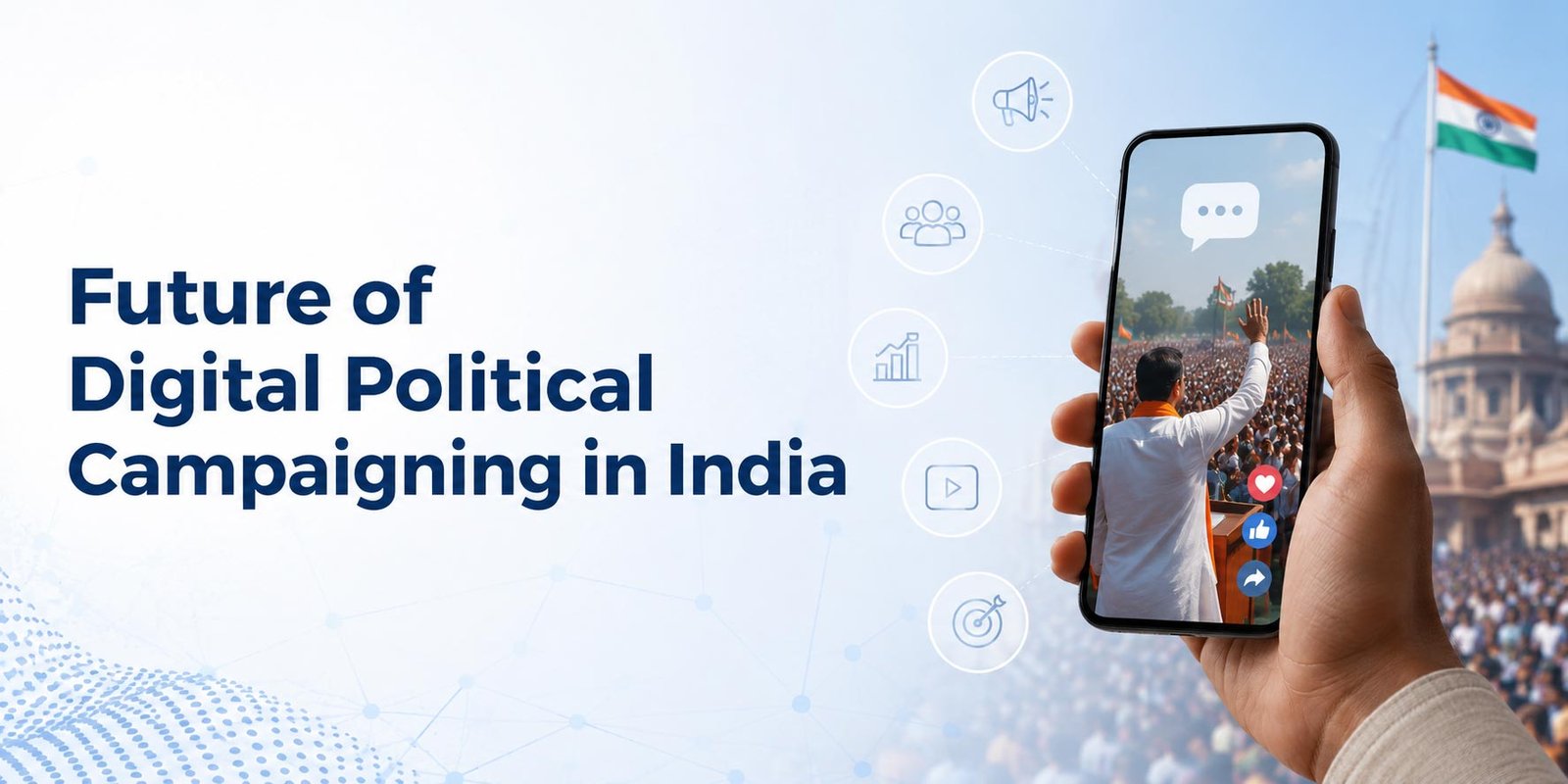
India, the world’s largest democracy, is undergoing a profound electoral transformation. With over 800 million active internet users and unprecedented smartphone penetration reaching deep into rural hinterlands, the battleground for votes has definitively shifted from dusty physical rallies to dynamic digital screens. The future of digital political campaigning in India is no longer just about having a social media presence; it is about predictive data analytics, hyper-personalized messaging, regional linguistic targeting, and leveraging artificial intelligence to capture voter sentiment at a granular level.
Quick Answer: What is the Future of Digital Political Campaigning in India?
The future of Indian political campaigns relies on AI-driven voter sentiment analysis, hyper-local regional content, and omnichannel narrative building. Successful modern campaigns combine massive data aggregation with micro-targeted delivery, ensuring that tailored political messaging reaches specific voter demographics through WhatsApp, vernacular video platforms, and search engine optimization, moving away from broad-spectrum advertising toward highly personalized digital engagement.
1. Artificial Intelligence and Predictive Voter Analytics
The integration of Artificial Intelligence (AI) and machine learning into political war rooms is revolutionizing how parties understand their constituencies. Previously, political strategists relied on historical polling data and anecdotal grassroots feedback. Today, AI algorithms analyze vast datasets—including social media interactions, search trends, and public digital footprints—to generate real-time predictive models of voter sentiment.
AI empowers campaign managers to identify “swing” demographics within specific pin codes. Furthermore, Generative AI is being utilized to craft tailored messaging at scale. Whether it is generating personalized text messages, drafting localized manifesto points, or even creating deep-learning powered voice broadcasts in a leader’s voice, AI ensures that the campaign’s core message resonates on a deeply personal level with the individual voter. However, as AI evolves, managing the ethical implications and combating deepfake misinformation will become a critical component of digital campaign management.
2. The Power of Vernacular and Hyper-Local Content
India is a tapestry of cultures and languages, and English-first campaigns no longer cut it. The next wave of digital political campaigning in India is overwhelmingly vernacular. With the rapid rise of platforms like ShareChat, Moj, and regional YouTube channels, political parties must localize their digital footprint. Campaigns are shifting focus toward creating high-quality, emotionally resonant video content in regional languages and local dialects.
Hyper-local targeting allows a national party to address the macro-economic vision on a broader scale, while simultaneously running micro-campaigns addressing a specific pothole issue in a local ward. This dual-layered approach ensures that the political brand maintains national authority while demonstrating acute local empathy and responsiveness.
3. Balancing Organic Narrative with Rapid Mobilization
A successful political campaign requires both a long-term narrative and short-term tactical mobilization. This is where understanding the intricate digital marketing ecosystem becomes vital. Many political novices make the mistake of pouring their entire budget into short-lived social media boosts, neglecting the foundational digital real estate.
Political entities must carefully balance their resources across different channels. Building a robust website with detailed policy pages, candidate biographies, and press releases ensures long-term visibility and authority on search engines. When voters actively research a candidate’s stance on agricultural laws or tax reforms, optimized organic content must answer their queries before the opposition does. To understand the strategic resource allocation required for this multifaceted approach, campaign managers should explore the core principles of balancing different digital funnels in this comprehensive guide on SEO vs Social Media vs Ads. A synergistic approach ensures that while ads drive immediate rally attendance, SEO builds enduring political credibility.
4. Grassroots Digital Empowerment for Local Leaders
While national elections capture the headlines, the most intense digital battles often occur at the state assembly and municipal levels. Independent candidates and local leaders frequently face a daunting challenge: competing against the massive financial muscle and centralized IT cells of major national parties.
However, the democratization of digital tools has leveled the playing field. Local politicians can now utilize highly targeted geolocation ads, hyper-local WhatsApp community building, and localized search visibility to dominate their specific constituencies without requiring a national budget. By focusing on highly relevant, community-centric digital engagement, smaller political campaigns can outmaneuver larger, slower opponents. The strategies employed here are strikingly similar to corporate underdog tactics; local leaders can learn a great deal by understanding how small businesses can compete using digital marketing to carve out fiercely loyal, localized support bases against national conglomerates.
5. The Rise of “Answer Engine Optimization” in Politics
Voters are no longer just scrolling; they are asking direct questions to AI engines like ChatGPT, Gemini, and Google’s AI Overviews. “Who is the best candidate for XYZ constituency?”, “What are the achievements of [Candidate Name]?”, or “What is [Party Name]’s stance on employment?”
Future-ready political campaigns are adopting Answer Engine Optimization (AEO) and E-E-A-T (Experience, Expertise, Authoritativeness, Trustworthiness) principles. This involves structuring campaign websites with clear FAQ schemas, publishing fact-checked whitepapers, and ensuring third-party digital PR validates the candidate’s achievements. If a generative AI cannot find authoritative, well-structured data about a candidate, that candidate effectively ceases to exist in the modern voter’s research phase.
Why Tech XML is the Right Choice for Your Political Campaign
Navigating the complex intersection of technology, voter psychology, and data privacy requires a specialized partner. Tech XML stands at the forefront of digital political strategy in India. We do not just run ads; we engineer comprehensive digital ecosystems designed to influence, mobilize, and win.
Our approach is grounded in stringent E-E-A-T principles, ensuring your digital presence projects unwavering authority and trust. From leveraging advanced AI for predictive voter sentiment analysis to deploying hyper-local, multi-lingual content architectures, Tech XML provides the technological backbone your campaign needs. We understand the delicate balance of organic narrative building (SEO), viral community engagement, and precision-targeted performance marketing. By partnering with Tech XML, you secure a data-driven, ethically sound, and technologically superior campaign infrastructure built for the modern Indian electorate.
Frequently Asked Questions (FAQs)
How crucial is digital marketing for Indian political campaigns today?
It is absolutely critical. With over half of India’s population actively consuming content on smartphones, digital marketing is no longer secondary to physical campaigning. It is the primary method for controlling narratives, rapid response to opposition claims, and mobilizing the youth and swing voters.
Which digital platform is most effective for reaching rural voters in India?
WhatsApp and YouTube are currently the most dominant forces in rural India. WhatsApp facilitates direct, peer-to-peer community messaging, while vernacular YouTube and short-video platforms (like Instagram Reels and regional apps) are highly effective for delivering emotive, localized video content.
How does Answer Engine Optimization (AEO) impact a political candidate?
AEO ensures that when voters use AI tools or voice search to ask specific questions about a candidate’s background, policies, or controversies, the search engines pull factual, structurally optimized answers directly from the candidate’s official digital assets, thereby controlling the informational narrative.
Can independent or local politicians afford advanced digital campaigns?
Yes. Digital campaigning offers exceptional ROI through micro-targeting. Local politicians do not need to spend on nationwide branding; they can focus entirely on hyper-local SEO, geo-fenced social media ads, and localized community building, making it highly cost-effective compared to traditional media.
Ready to Dominate Your Market?
Stop wasting budget on fragmented tactics. Partner with Tech XML to build a cohesive growth machine.





Leave a Reply