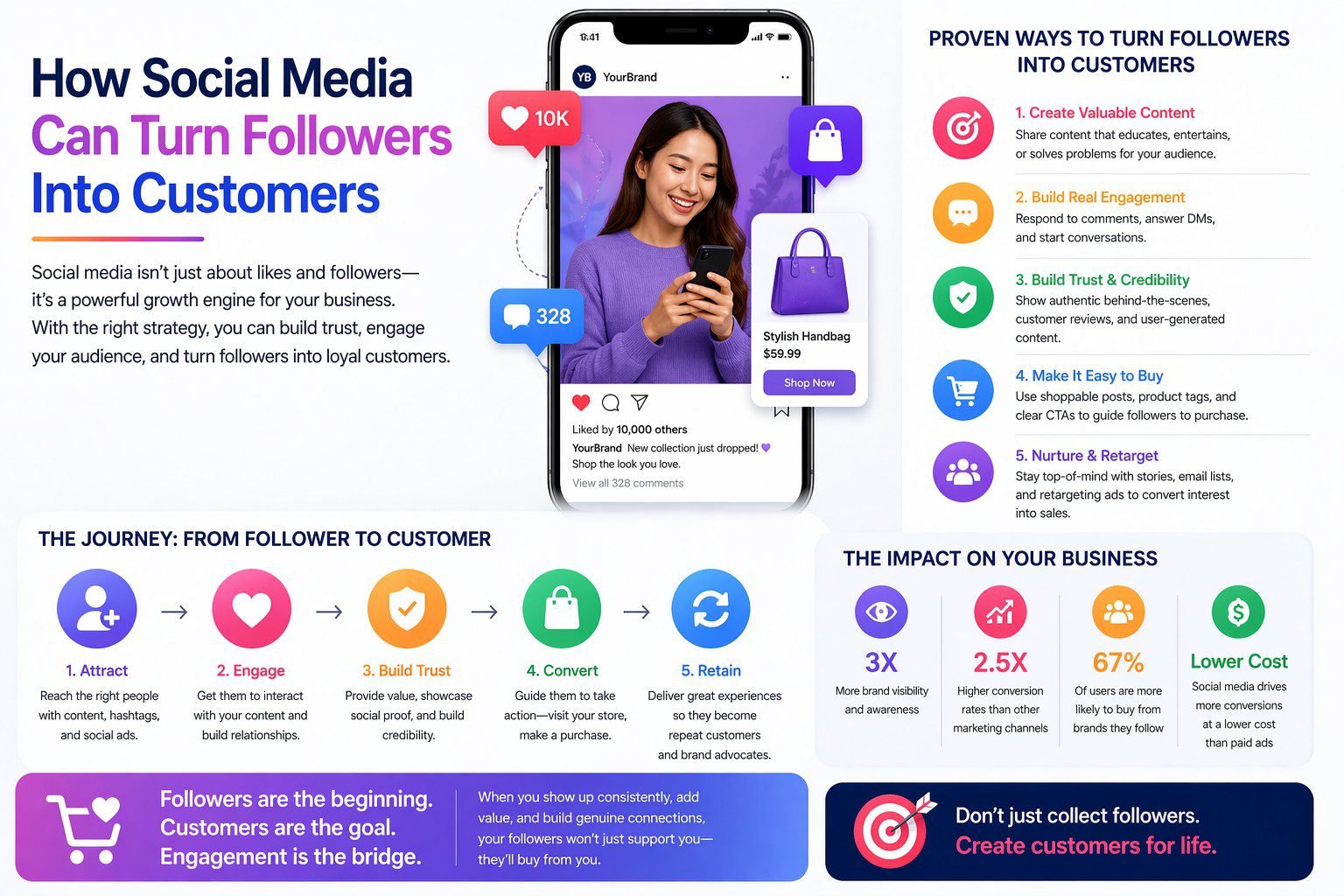
A strong social media marketing strategy often brings visibility, but visibility alone does not drive revenue. Many brands gain followers quickly, yet they struggle to convert that attention into consistent sales. This gap creates confusion because engagement appears promising, but outcomes remain uncertain.
In 2026, social media has shifted from a discovery tool to a decision environment. Users scroll with intent, evaluate brands quietly, and decide based on trust signals rather than frequency of posts. Therefore, understanding this shift becomes essential for any business trying to grow.
- Followers convert when trust builds through consistent value driven content
- Engagement alone does not guarantee sales without intent driven messaging
- Structured social media marketing strategy creates predictable customer flow
- Integration with SEO and broader channels improves long term results
Table of Contents
- The Changing Nature of Social Media Behavior
- Understanding the Modern Social Media Funnel
- Why Engagement Alone Falls Short
- Content That Builds Buying Intent
- A Real World Usage Scenario
- Case Study
- Role of a Structured Agency Approach
- Why Social Media Needs an Ecosystem
- User Reviews
- Forum Discussions
- FAQs
- Conclusion
The Changing Nature of Social Media Behavior
Social platforms now reward depth over reach. Algorithms prioritize content that holds attention and sparks meaningful interaction instead of quick reactions. As a result, likes and follower counts no longer indicate real performance.
Users have also become more selective in what they consume. They engage less frequently, but when they do, it reflects genuine interest. Because of this, audience engagement strategy must focus on relevance rather than volume.
Social media ROI now depends on how well a brand connects with its audience. Brands that focus on clarity and usefulness often outperform those that focus only on creativity. This shift defines the modern landscape.
Understanding the Modern Social Media Funnel
The journey from follower to customer follows a structured path. It begins with awareness, moves into familiarity, builds trust, and finally leads to a decision. Each stage requires a different type of communication.
Awareness comes easily through consistent posting. However, familiarity grows when content remains relevant over time. When users recognize a brand repeatedly, they begin to pay closer attention.
Trust builds when content solves real problems or answers specific questions. Only after trust forms do users consider making a purchase. This is where turning followers into customers becomes practical.
Why Engagement Alone Falls Short
Engagement often creates a misleading signal. A post may receive high interaction, yet it may not influence buying behavior at all. Passive engagement does not indicate readiness to purchase.
Content driven conversions require a shift toward value based communication. Entertaining posts attract attention, but informative content builds credibility. That distinction shapes conversion outcomes.
Brands must evaluate the intent behind engagement. If users interact without trust, conversion remains unlikely. Therefore, engagement must align with purpose.
Content That Builds Buying Intent
Content that drives results typically follows three directions. Educational content explains problems clearly. Proof based content demonstrates real outcomes. Positioning content establishes authority.
Educational content reduces confusion and builds awareness. Meanwhile, proof based content increases confidence through visible results. In addition, positioning content helps users understand why a brand stands out.
Social media conversion tactics depend on this balance. Without it, followers remain observers instead of customers. Structured content creates movement within the funnel.
A Real World Usage Scenario
A fitness coach posting daily workouts gained consistent engagement but minimal inquiries. The audience enjoyed the content but did not see a clear next step. As a result, growth remained limited.
The coach then introduced transformation stories, diet insights, and common mistakes. This shift changed how followers interacted with the content. Gradually, conversations began to increase.
Within a few months, inquiries turned into paid programs. The difference came from a refined social media marketing strategy focused on intent rather than visibility.
Case Study
A skincare brand with a large audience faced inconsistent sales. Their content focused heavily on aesthetics, which attracted attention but did not build trust. Therefore, conversion remained unstable.
They introduced educational posts about skin routines and ingredient benefits. In addition, they shared customer experiences and visible results. This created a stronger connection with their audience.
Over time, conversions improved, and revenue became predictable. The shift demonstrated how structured communication influences customer decisions.
Role of a Structured Agency Approach
As businesses grow, execution complexity increases. Internal teams often miss patterns that affect performance. Therefore, a structured approach becomes necessary.
For example, :contentReference[oaicite:0]{index=0} provides a dedicated Social Media Management Agency framework. The focus remains on aligning content, timing, and audience behavior.
This approach creates clarity in execution. As a result, brands shift from random engagement to measurable outcomes. Strategy replaces guesswork.
Why Social Media Needs an Ecosystem
Social media alone cannot complete the customer journey. It introduces the brand, but other channels support decision making. Therefore, integration becomes essential.
For instance, insights from digital marketing in political campaigns show how consistent messaging influences behavior. Similarly, learning from how SEO can grow your business without paid ads highlights the role of organic intent.
When these channels align, they create a unified customer acquisition strategy. Social media becomes part of a larger system rather than an isolated effort.
User Reviews
Rohit Sharma, Mumbai noticed that frequent posting did not translate into sales. After shifting toward value driven content, he observed more inquiries and better audience response. The improvement felt gradual but consistent.
Emily Carter, London shared that engagement was high, but conversions were weak. Once educational content became the focus, customer trust improved significantly. Sales followed naturally over time.
Arjun Mehta, Delhi realized that creativity alone was not enough. When he clarified his messaging, his audience began responding with intent. This change improved both conversations and revenue.
Forum Discussions
Question by Neha Verma, Jaipur asked why smaller accounts often outperform larger ones in sales. She observed that follower count did not always correlate with results.
Community Reply by Daniel Lee, Singapore explained that smaller audiences often trust the creator more deeply. This trust leads to higher conversion rates despite lower reach.
Question by Marcus Hill, New York questioned whether paid advertising is necessary for conversions. He wanted to understand the role of organic strategy.
Community Reply by Priya Nair, Bangalore clarified that paid ads help scale reach, but organic content builds trust. Both can work together, but strong content remains essential.
FAQs
How long does it take to convert followers into customers?
Conversion timelines vary depending on industry and content clarity. Some businesses see results quickly, while others require consistent effort over several months to build trust.
Can small businesses compete effectively on social media?
Yes, smaller businesses often create stronger connections with their audience. Their content feels authentic, which increases trust and improves long term conversion potential.
What type of content drives the most conversions?
Educational, proof based, and authority driven content performs best. It helps users understand their needs and builds confidence before making a decision.
Do algorithms directly affect conversion rates?
Algorithms impact visibility, but conversions depend on content quality. Even high reach cannot compensate for unclear messaging or lack of trust.
Is consistency more important than creativity?
Consistency builds trust over time, while creativity attracts attention. Both are important, but consistency often drives sustainable results.
Conclusion
Social media now operates as a decision making environment rather than a simple visibility channel. Followers convert when they understand and trust a brand. Therefore, strategy must focus on clarity, intent, and connection.
A well structured social media marketing strategy respects the customer journey. It builds relationships instead of chasing quick wins. Over time, this approach creates predictable and sustainable growth.






Leave a Reply