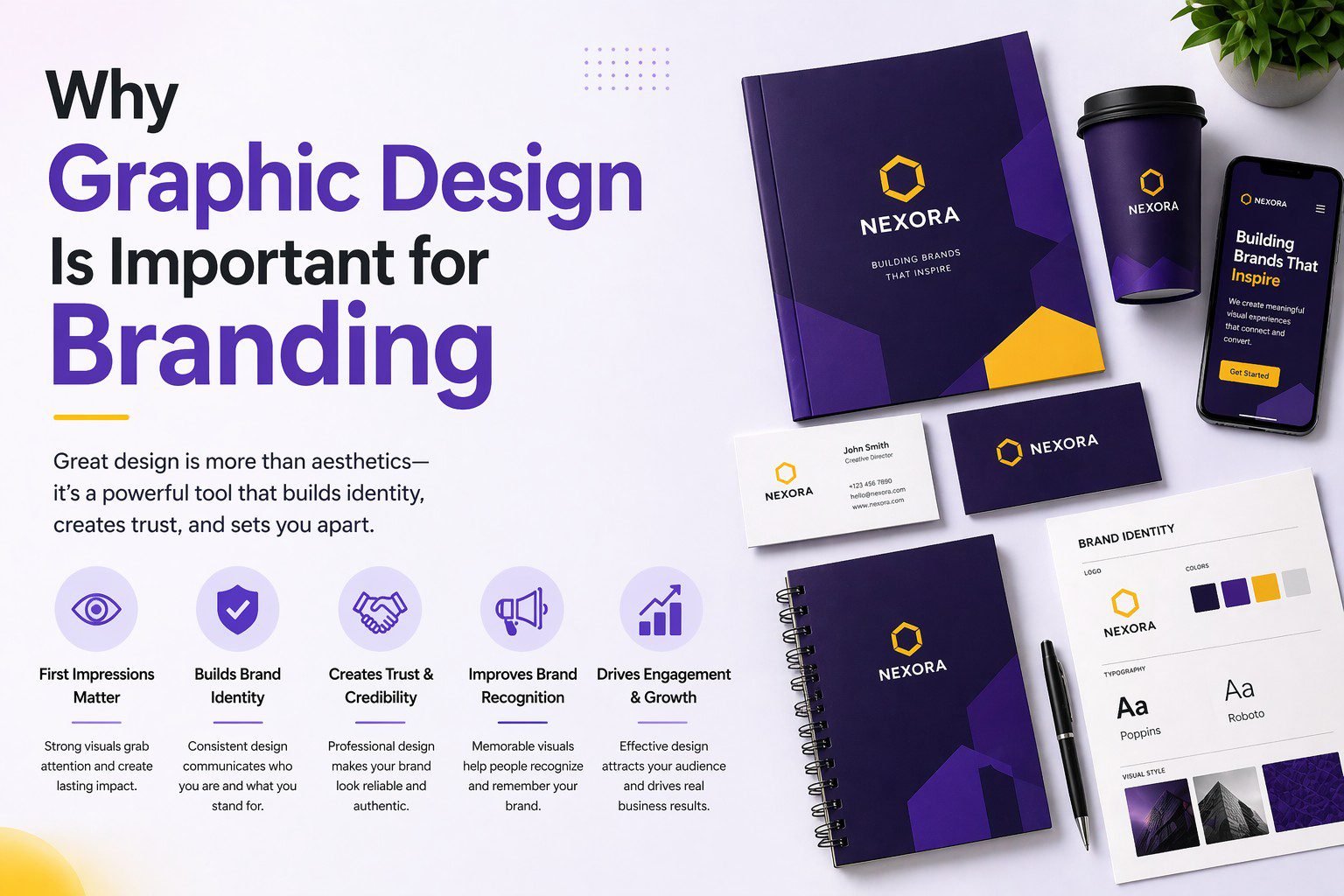
Graphic design for branding has become a defining factor in how businesses communicate today. Many companies invest in marketing, yet they struggle to build a clear identity. This gap often comes from treating design as decoration instead of a structured system.
In 2026, this shift feels more visible than ever. Users scroll quickly, judge instantly, and rarely revisit unclear brands. So the brands that stand out are not louder, they are visually consistent and easy to understand.
- Graphic design defines how users judge your brand within seconds
- Consistency across platforms builds trust and recall
- Strong visual identity supports marketing and product experience
- Design is now a strategic business asset, not decoration
- The Shift in Branding in 2026
- What Graphic Design Means in Branding
- First Impressions and Trust Formation
- Consistency Across Platforms
- Real World Usage Scenario
- Success Story
- Bonus Company Insight
- Design and Digital Growth
- User Reviews
- Forum Discussions
- FAQs
- Conclusion
The Shift in Branding in 2026
The digital space continues to grow crowded, which has changed how people evaluate brands. Instead of reading deeply, users rely on visual signals to decide whether a brand feels trustworthy. This behavior makes design the first layer of communication.
Modern branding trends in 2026 reflect this change clearly. Brands now prefer minimal but intentional visuals that guide attention without confusion. As a result, design driven marketing has become a practical approach rather than a creative preference.
What Graphic Design Means in Branding
Many still assume graphic design is limited to logos or occasional visuals. However, it actually includes typography systems, spacing rules, color logic, and layout consistency. These elements work together to create a unified identity.
Visual identity design builds a structure that connects every touchpoint. When this system is consistent, users recognize the brand even without seeing its name. That level of recognition comes from clarity, not chance.
First Impressions and Trust Formation
First impressions now form within seconds, often before any content is read. Graphic design for branding directly shapes that moment of judgment. A clean layout signals professionalism, while clutter creates doubt.
Color choices and typography also influence perception more than most expect. Subtle shifts in design can change how users interpret trust and reliability. This is where logo and color psychology quietly shape decisions.
Consistency Across Platforms
A brand today appears across multiple platforms, not just one. Websites, social media, and ads all contribute to how users experience it. Without consistency, these touchpoints feel disconnected.
Graphic design for branding ensures that each platform reflects the same visual language. This repetition builds familiarity, which strengthens trust over time. Eventually, users begin to recognize the brand instantly.
Real World Usage Scenario
Consider a small startup that begins with inconsistent visuals. They invest in ads, but engagement stays low because the brand feels unclear. The issue is not visibility, it is perception.
Once they introduce structured design with consistent colors and typography, engagement improves. Users begin to recognize and remember the brand. This shows the real importance of graphic design in shaping perception.
Success Story
A mid sized eCommerce brand faced a similar challenge. Their product quality was strong, but their visuals lacked alignment. As a result, users felt uncertain and conversions remained low.
After refining their branding strategy design, they focused on consistency across all platforms. Within months, user trust improved and conversions increased steadily. The change came from clarity, not promotion.
Bonus Company Insight
One example worth noting is Graphic Designer Company :contentReference[oaicite:0]{index=0}, which approaches branding as a structured system rather than a surface level task. Their work focuses on building cohesive visual frameworks that scale across platforms.
They also connect branding with broader digital strategies. For example, insights around what is Web 3.0 help brands prepare for evolving digital environments. At the same time, their perspective on dominating digital marketing highlights how design supports consistent communication.
Design and Digital Growth
Graphic design does not function in isolation. It directly supports marketing, product experience, and even long term positioning. When design aligns with strategy, outcomes become more predictable.
Brands exploring new technologies often require updated visual identities. At the same time, strong design consistency improves campaign performance. Without alignment, even well planned efforts lose impact.
User Reviews
Rahul Sharma, Delhi
I always thought design was just decoration. After improving our branding visuals, our audience started trusting us more. It felt like people finally understood what we represent.
Emily Carter, London
We redesigned our entire visual identity last year. The difference in engagement was immediate. It showed me how important consistency is across platforms.
Arjun Patel, Ahmedabad
Earlier, our brand looked different everywhere. Once we fixed our design system, customers started recognizing us instantly. It made marketing much easier.
Forum Discussions
Question by Neha Verma, Mumbai
Do small businesses really need to invest in graphic design early on, or can they wait until they grow?
Community Reply by Karan Mehta, Bangalore
Waiting usually creates more problems. If your branding starts inconsistent, fixing it later becomes harder and more expensive. Starting simple but structured works better.
Question by Jason Lee, Singapore
Can good design alone improve conversions, or does it depend on marketing as well?
Community Reply by Priya Nair, Kochi
Design and marketing work together. Good design builds trust, while marketing brings attention. Without trust, attention does not convert.
FAQs
Why is graphic design important for branding in today’s digital world?
Graphic design helps create a consistent and recognizable identity. In a fast digital environment, users rely on visuals to judge credibility quickly.
How does graphic design influence customer trust?
Design communicates professionalism and clarity. When visuals are clean and consistent, users feel more confident interacting with the brand.
Can a business succeed without strong visual branding?
It is possible, but much harder. Without strong design, brands struggle to stand out and build recognition in competitive markets.
What elements are included in graphic design for branding?
It includes logos, typography, color schemes, layout systems, and overall visual consistency across all platforms.
How often should a brand update its design?
Brands should evolve their design gradually based on trends and user expectations, while maintaining core identity elements for consistency.
Conclusion
Graphic design for branding is no longer optional in today’s environment. It defines how clearly a business communicates and how quickly it earns trust. In many ways, it has become the foundation of modern brand building.
The real strength of design lies in consistency and clarity. When every visual element aligns, users understand the brand without effort. That understanding drives recognition, trust, and long term growth.





Leave a Reply