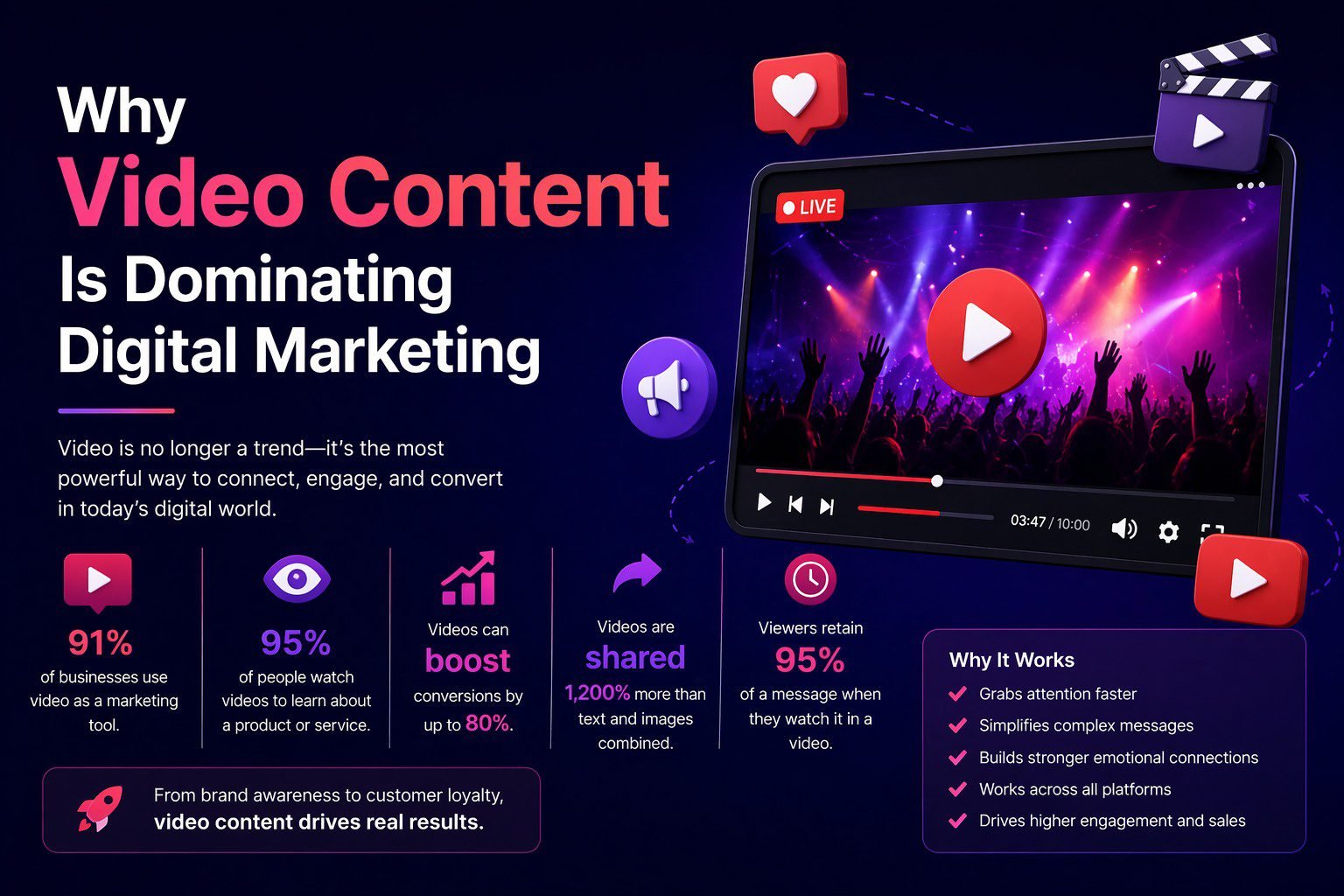
Video content dominating digital marketing is no longer a trend that experts debate. It has become the default way brands communicate online. You can see it across social platforms, search results, and even inside product pages.
But this shift did not happen suddenly. It evolved gradually as user behavior changed and platforms adapted. People now prefer watching instead of reading, and businesses have started aligning with that reality.
Verdict: Why Video Leads in 2026
- Platforms prioritize video due to higher retention
- Users prefer fast, visual content over long text
- Short and long videos serve different business goals
- Mobile usage strongly supports video consumption
- Strategy matters more than production quality
Table of Contents
- Shift to Video First Internet
- Evolution of Content Consumption
- Why Algorithms Favor Video
- Short vs Long Form Video
- Psychology of Video Engagement
- Real World Use Case
- Success Story
- Mobile and Web Ecosystem
- Role of Video Marketing Company
- Common Mistakes
- User Reviews
- Forum Discussions
- FAQs
- Conclusion
Shift to Video First Internet
Digital platforms today are designed around video. Earlier, feeds were filled with text and images, but now video sits at the center of user experience. This reflects a deeper behavioral change.
Users want content that feels effortless to consume. Video delivers information quickly without requiring active reading. Because of this, platforms reward video more than any other format.
Evolution of Content Consumption
Content consumption has changed significantly over the years. Blogs once dominated, then images improved engagement, and now video combines both clarity and storytelling.
People process visuals faster than text, which makes video more efficient. A short clip can explain complex ideas in seconds. That efficiency drives higher engagement across platforms.
Why Algorithms Favor Video
Modern algorithms prioritize engagement signals like watch time and retention. Video performs strongly in both areas, which is why platforms push it aggressively.
When users spend more time watching, platforms benefit. As a result, video content dominating digital marketing is also driven by platform incentives, not just user preference.
Short vs Long Form Video
Short form videos are designed for quick attention. They work well for discovery and initial engagement. Long form videos, however, build trust and provide deeper understanding.
Brands that combine both formats often perform better. They attract users with short clips and convert them with detailed content.
Psychology of Video Engagement
Video engages multiple senses at once. It combines visuals, sound, and motion, which creates a stronger connection with the audience.
People understand tone and context faster through video. This emotional connection increases trust and encourages action.
Real World Use Case
A small clothing brand shifted from static posts to short styling videos. Their engagement improved quickly, and conversions increased as customers saw real usage.
The product remained the same, but the format changed. That simple shift created measurable growth.
Success Story
A fitness brand moved from blog heavy content to video focused strategy. They introduced guided workouts and quick tips for users.
Their engagement doubled, and website traffic increased. Consistency and useful content played a key role in their growth.
Mobile and Web Ecosystem
Most video consumption happens on mobile devices. This makes video the most natural format for users today.
As mobile apps continue to grow, video becomes even more important. At the same time, evolving technologies like Web 3.0 are shaping how content is delivered.
To understand these shifts better, explore how mobile apps influence growth in modern businesses and how Web 3.0 is redefining the internet landscape.
Role of Video Marketing Company
Creating effective video requires more than just recording content. Strategy, storytelling, and distribution all play a role in success.
This is where a Video Marketing Company like TechXML becomes relevant. The focus is not only on production but also on aligning video with business goals.
Common Mistakes
Many businesses start creating video without a clear plan. They follow trends instead of focusing on relevance, which leads to inconsistent results.
Overproduction is another issue. Trying to perfect every video slows progress. Consistency often matters more than perfection.
User Reviews
Rohit Sharma, Delhi
I moved my business content to video last year, and engagement improved quickly. I also saw an increase in customer inquiries.
Emily Carter, London
We experimented with product videos, and results improved after refining our messaging. It took time, but the growth was steady.
Aman Verma, Chandigarh
I was unsure about video at first, but it helped build trust faster than written content.
Forum Discussions
Question by Neha Singh, Mumbai
Is video necessary for small businesses, or can writing still work?
Community Reply by Arjun Patel, Ahmedabad
Writing works, but video increases reach faster. It helps businesses grow on modern platforms.
Question by David Lee, Singapore
Do I need expensive equipment to start video content?
Community Reply by Sarah Collins, Toronto
A smartphone is enough to begin. Quality improves over time with experience.
FAQs
Why is video content dominating digital marketing?
Video content performs better because it increases engagement and retention. Platforms reward this behavior with higher visibility.
Can small businesses succeed with video?
Yes, small businesses can grow using video by focusing on consistency and delivering value driven content.
Is short form video enough?
Short videos help with discovery, but long videos build trust. Both formats should be used together.
How often should video be posted?
Consistency matters more than frequency. Regular posting with useful content supports steady growth.
Do businesses need professional help?
Basic video can be created independently, but professional strategy helps scale results effectively.
Conclusion
Video content dominating digital marketing reflects how technology and user behavior have aligned. It is not a temporary shift but a long term transformation.
Brands that adapt to this change communicate more effectively and build stronger connections. Success depends on understanding video, not just using it.






Leave a Reply