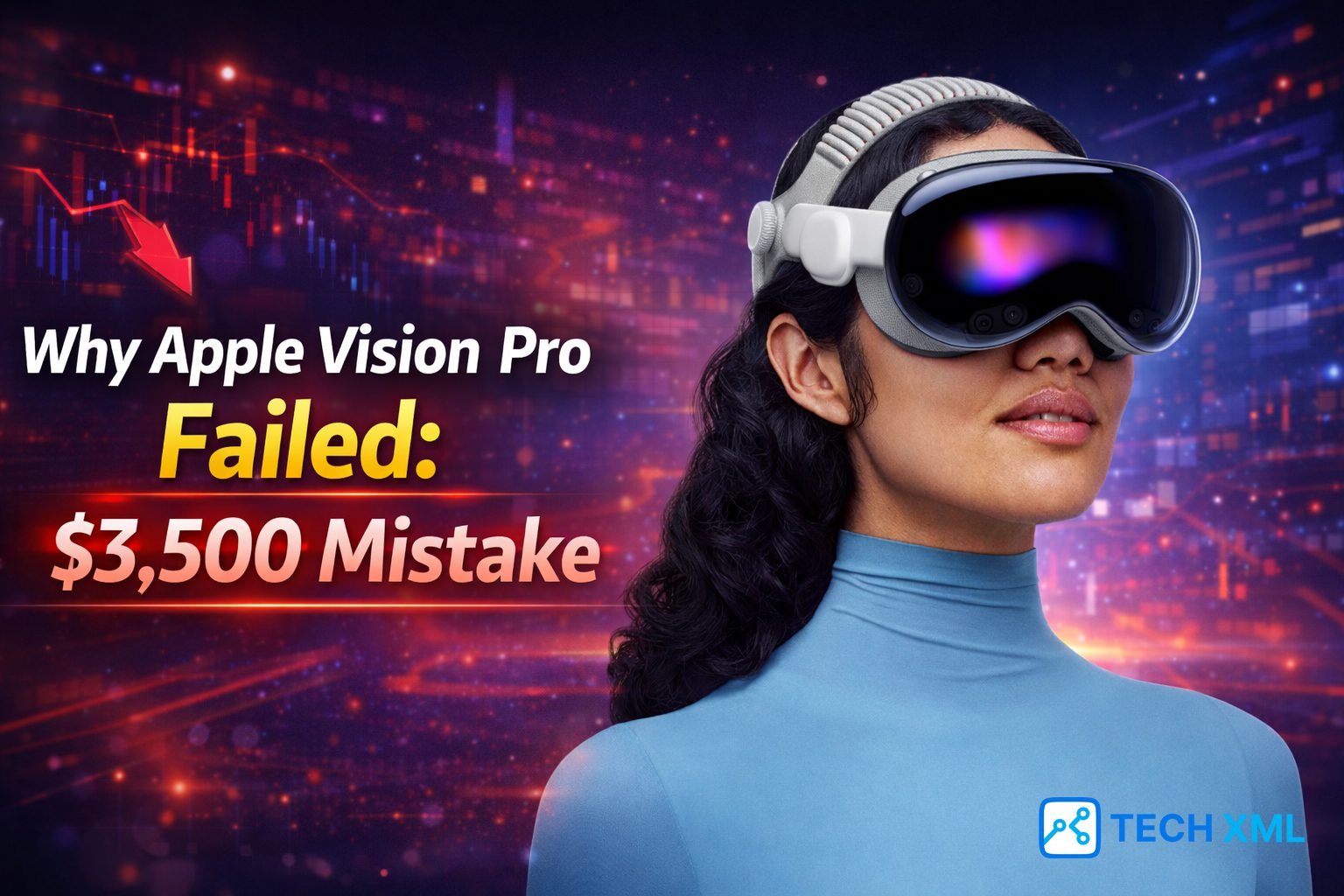
When Apple introduced its first spatial computer, the industry paused with curiosity rather than certainty. The promise felt bold, yet many readers struggled to see how this device fit into daily life. As months passed, excitement cooled into quiet skepticism. That shift explains why Apple Vision Pro failed to meet its own expectations in the consumer market.
Apple entered spatial computing believing users were ready for a post-smartphone era. However, consumer behavior in 2026 showed patience had limits. Even loyal users wanted immediate value, not long-term imagination. This article dissects the strategic missteps that led to this outcome.
- The Price: $3,500 removed all forgiveness for flaws.
- The Habit: Immersive video didn’t replace daily workflows.
- The Verdict: Technological marvel, practical failure.
The Market Apple Expected vs. Reality
Apple assumed that premium buyers would tolerate friction for future-facing technology. However, historically, Apple succeeded by refining categories already understood by users, like the phone or the watch. Spatial computing required creating new habits from scratch.
That gap widened the moment real usage replaced launch demos. Users discovered that while the tech was impressive, the reason to wear it daily was missing. This lack of a “daily driver” use case is a primary reason why Apple Vision Pro failed to stick.
Price Shock Exposed Deeper Issues
At launch, the Apple Vision Pro price dominated every conversation. A $3,500 product invites comparison with laptops, phones, and televisions combined. When expectations rose, tolerance for compromise fell sharply.
Pricing did not kill interest alone, but it removed forgiveness. That pressure accelerated the realization that the device failed to justify its position in a crowded tech ecosystem. Users asked what problem it solved today, not what it could do in five years.
Hardware Excellence Met Human Limits
From an engineering perspective, the headset impressed reviewers. Displays looked sharp, and tracking felt precise. Yet, human comfort imposed limits technology could not bypass. Weight distribution caused fatigue, and the external battery added friction.
Users enjoyed short experiences but avoided extended use. Biology quietly overruled innovation, contributing significantly to why Apple Vision Pro failed to become a household staple.
Social Reality Worked Against Adoption
Technology adoption often depends on social comfort. Wearing an enclosed headset distanced users from their surroundings. Unlike phones or earbuds, this device separated users from shared spaces.
Many users felt awkward wearing the device around family or colleagues. Public use felt impractical, while private use felt isolating. That cultural friction slowed acceptance quietly but decisively.
Real World Usage Scenario
Consider a creative professional who purchased the headset after launch. During the first week, exploration felt exciting. By the second month, sessions shortened. Eventually, the headset became an occasional novelty rather than a tool.
This experience repeated across households. The friction of putting it on outweighed the value of using it, explaining why Apple Vision Pro failed to anchor itself in routine behavior.
User Reviews: The Voice of the Customer
Rohan Mehta, Bengaluru
“Impressive but impractical. I enjoyed the immersive video, but it felt too heavy for daily work. I went back to my laptop within a month.”
Emily Carter, Austin
“I wanted to replace my home office. Instead, I found switching contexts exhausting. It sits unused most days now.”
Daniel Wong, Singapore
“Engineering discipline is there, but I couldn’t explain its purpose to my friends. Without clarity, my enthusiasm faded.”
Forum Discussions
Arjun, Mumbai asks:
“Is the technology ready for mainstream?”
Community Reply:
“Technically yes, culturally no. Apple moved ahead of human comfort levels. It feels isolating.”
Lisa, Toronto asks:
“Was it just the price?”
Community Reply:
“No. Even at half the price, the lack of daily utility remains the core issue. It’s a solution looking for a problem.”
Frequently Asked Questions
Did technology limitations cause the failure?
No. The technology worked well, but usability, weight, and habit formation lagged behind.
Did price alone doom the product?
Price accelerated scrutiny, but unclear daily value caused the deeper hesitation among users.
Can enterprise adoption save it?
Niche enterprise success is possible, but scaling remains difficult without cost and comfort improvements.
Does this end Apple’s spatial ambitions?
Unlikely. Apple often iterates quietly. This chapter offers lessons rather than finality.
Conclusion
The story behind this headset is not about incompetence; it is about timing and behavior. Apple Vision Pro failed as a consumer product, not as a vision. Apple’s strength lies in learning from controlled setbacks. Spatial computing may still arrive, but only when users are truly ready for it.






Leave a Reply