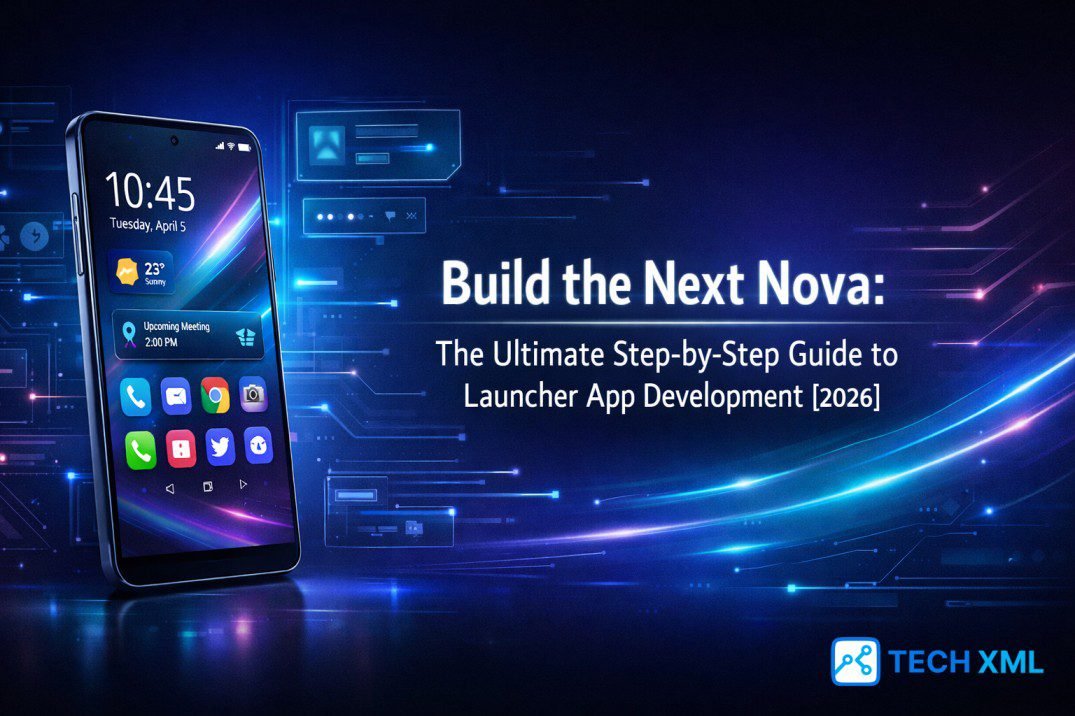
Launcher app development sounds exciting at first, especially when you imagine building the next big Android experience. However, many developers feel stuck once they move beyond basic customization and face real system behavior. Performance issues, stability concerns, and long-term support suddenly feel overwhelming.
This confusion is common, even among developers who feel confident with Android fundamentals. A launcher is not just another app. It becomes the user’s default way of interacting with their phone, which increases responsibility instantly.
This guide simplifies launcher app development by focusing on clarity before complexity. Instead of rushing into features, it helps you understand how launchers actually work in 2026. The goal is simple: help you build with confidence, not guesswork.
- The Challenge: Launchers must run 24/7 without draining battery.
- The Solution: Modular architecture and disciplined memory management.
- The Result: A stable, smooth, and trusted user experience.
Table of Contents:
Understanding Launcher App Development in 2026
Launcher app development in 2026 requires a mindset shift. Earlier launchers focused mainly on appearance, but modern launchers operate closer to the system layer. They influence daily habits, navigation speed, and overall phone comfort.
Users now expect their launcher to feel invisible and reliable. They want speed, consistency, and privacy without ever thinking about how it works. Because of this, launcher developers must think like system designers, not theme creators. Understanding this responsibility early prevents frustration later.
What a Launcher Actually Controls
A launcher controls the home screen layout, app drawer behavior, gesture navigation, and how users move between apps. It shapes muscle memory through repeated daily use. At the same time, a launcher does not control core Android services. Knowing this boundary helps avoid impossible feature ideas.
Why Launcher Apps Fail After Initial Release
Most launcher apps do not fail because of design. They fail because of invisible issues like lag, battery drain, and inconsistent gestures. Users rarely complain; they simply uninstall. Successful launcher app development prioritizes trust and stability over novelty.
Defining the Purpose of Your Launcher
Every successful launcher begins with a clear purpose. Without it, development becomes reactive and scattered. Your launcher should solve one daily problem exceptionally well.
Choosing Simplicity Versus Feature Density
Adding features feels productive, but it often reduces trust. Simplicity improves predictability and comfort. A launcher must feel reliable during stressful moments, not overwhelming. Choosing restraint early saves years of refactoring later.
Avoiding Clone Thinking
Copying popular launchers may feel safe, but users already trust the original. Clones struggle to build identity and loyalty. Differentiation should focus on experience, not appearance.
Technical Foundations Before Writing Code
Launcher app development demands strong architectural thinking. Quick shortcuts may work temporarily, but they break silently after updates. Planning system interaction early prevents irreversible mistakes.
Android System Interaction Basics
A launcher responds to system intents and lifecycle events continuously. Android treats launchers differently from regular apps, especially under memory pressure. Ignoring this leads to crashes. Respecting system boundaries improves stability.
Permissions and Security Considerations
Users distrust launchers that request unnecessary permissions. Privacy awareness has grown significantly. Minimal permission usage improves adoption instantly. Transparency builds confidence, while silence creates suspicion.
Performance and Stability Planning
Performance defines emotional response. Smoothness feels like quality. Launchers run constantly, so small inefficiencies multiply silently. Planning performance early avoids painful fixes later.
Memory Management Strategies
Launchers must release resources aggressively. Memory pressure exposes weak planning quickly. Caching must feel intentional, not excessive. Efficiency becomes a feature users appreciate subconsciously.
Battery Impact Control
Battery drain causes silent uninstalls. Users blame launchers quietly. Background work must stay minimal and purposeful. Energy discipline builds loyalty.
Latest Tech Updates:
- Data Analytics Trends 2026: Why Big Data Is Finally Dead
- Content and Link Building Strategy: A Unified SEO Guide (2026)
- Stop Losing Users at Login: Why Smart Authentication is the Key to Higher Conversion Rates
- Best CRM Platforms: 10 Tools for Small Business Success (2026)
- App Launch Hype: Don’t Launch Your App in Silence (2026 Guide)
How Srishta Technology Private Limited Can Help You
Launcher app development often benefits from experienced guidance. Srishta Technology Private Limited helps developers gain clarity without taking creative control away. They support idea validation, architecture planning, and performance optimization.
From Idea Validation to Technical Blueprint
Srishta Technology refines concepts into clear execution plans. Ambiguity transforms into structure. Early alignment prevents wasted effort, ensuring direction feels steady from the start.
Play Store Compliance and Launch Support
Play Store policies change frequently. Compliance guidance from Srishta Technology reduces rejection risk. Documentation and alignment keep launches smooth, keeping momentum intact.
Success Story: From Lag to Loyalty
A solo developer started a launcher as a weekend project. Early excitement faded once performance issues appeared. Instead of quitting, they restructured the architecture with expert guidance.
Over time, stability improved. Users noticed smoother navigation. Retention increased steadily. The launcher eventually became a daily driver for thousands of users. Persistence and clarity transformed failure into trust.
User Reviews
Aman Sharma, Delhi: “The launcher feels calm and reliable. I noticed smoother navigation and better battery behavior within days.”
Neha Kulkarni, Pune: “I value consistency over flash. Predictable gestures and stability improved my daily usage.”
Frequently Asked Questions
Can a beginner start launcher app development?
Yes, beginners can start if they focus on understanding system behavior and plan architecture carefully before writing large amounts of code.
How long does it take to build a stable launcher?
A stable launcher usually takes several months, depending on scope, testing depth, and performance goals. It is a marathon, not a sprint.
Do launchers affect phone performance?
Launchers affect performance only when poorly optimized. Disciplined design and memory management keep the impact minimal and invisible.
Is Play Store approval difficult for launchers?
Approval is manageable when permissions remain minimal and behavior aligns with platform policies. Strategic partners like Srishta Technology can help navigate this.
Conclusion: Build Thoughtfully, Not Just Quickly
Launcher app development feels manageable when clarity replaces haste. Understanding shapes confidence more than speed. This guide focused on thinking before building.
With the right mindset, structure, and support, launchers can scale responsibly. You are now prepared to build thoughtfully and confidently.




Leave a Reply